And why is 90% of it already pre-leased years before completion without a clear use case? The answer is terrifying.
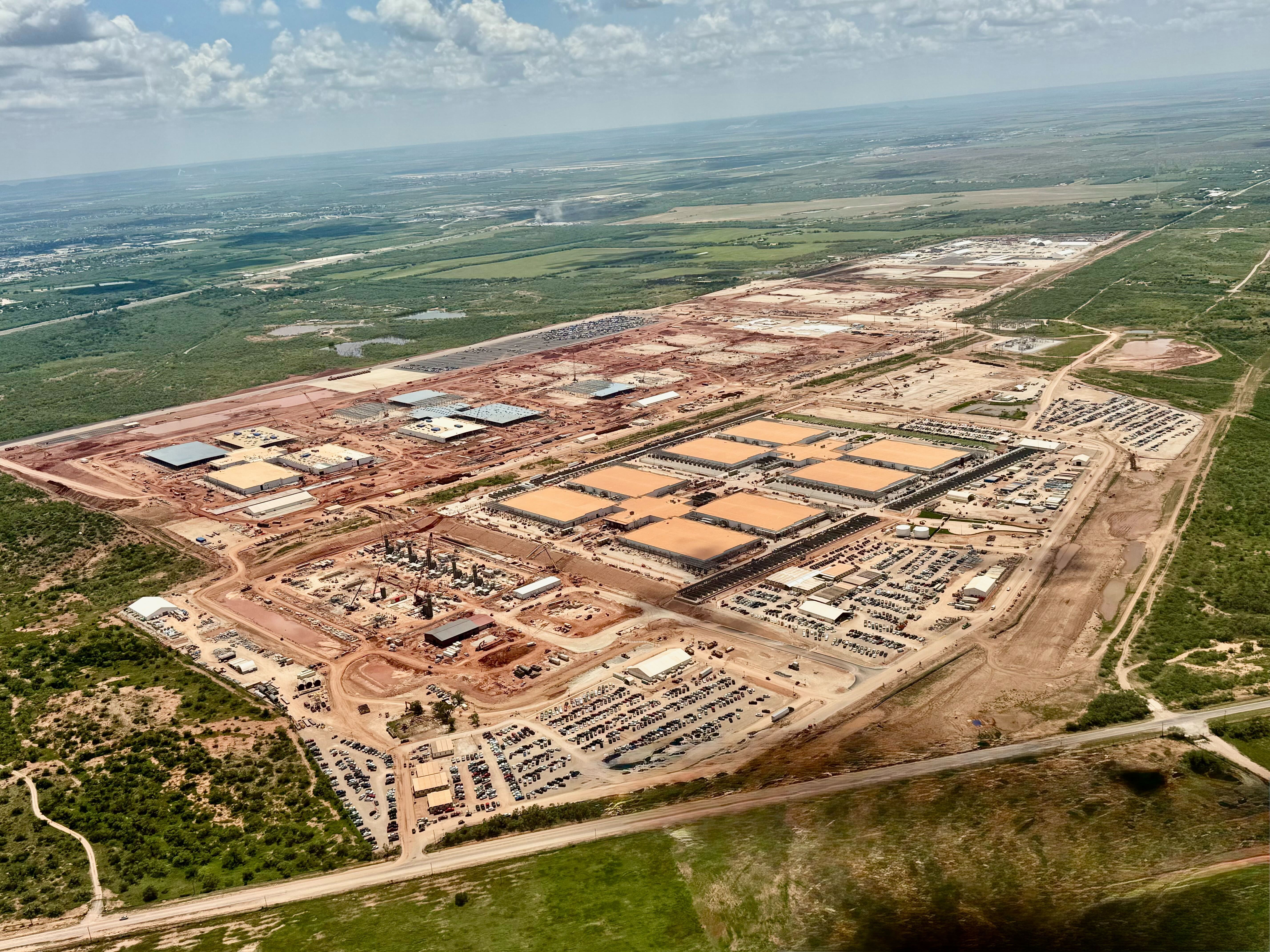
Tech billionaires are building data centers the size of Manhattan, and 90% of the capacity is already pre-leased years before completion. Mark Zuckerberg alone has announced multiple facilities this massive. Amazon is dropping $2 billion on a single facility in Ohio. Microsoft is planning an $80 billion build out for 2025.
Sam Altman told a verge reporter on August 18th,
“You should expect OpenAI to spend trillions of dollars on data center construction in the not very distant future”
Trillions of dollars!
To understand why this is happening now, we need to talk about the political circus that’s happening simultaneously.
You’ve probably noticed our leaders are acting like cartoonishly obvious sellouts to Israel. They’re not even subtle about it anymore, a foreign nation that’s said to be dependent on us. Yet, the supposedly most powerful people in the United States are bending over backwards for Israel in ways that tank their popularity at home. The natural reaction to our tax dollars funding Benjamin Netanyahu’s wet dreams is pure outrage. However, the intended reaction might be something else entirely.
The Theater of Dysfunction

What if this whole ‘foreign control’ theater serves a dual purpose – real corruption and a calculated setup. A setup to make you hate the current human governance so much that when they finally pitch an AI replacement, you’ll welcome it with open arms. Before all is said and done and they reveal the depths to which the control goes, they could have people begging for it.
The theory goes deeper than simple political theater. Consider the possibility that they’re holding back a more powerful AI that hasn’t been released to the public, or at least that’s what they’ll claim when the time comes. This addresses the obvious objection that current AI isn’t sophisticated enough for governance. What if it already is, behind closed doors?
Precedent For Technology Gap

There’s precedent for this kind of technological gap. Military and intelligence capabilities often remain classified for years or decades. The internet, GPS, and various encryption technologies all had significant development before public release. The basic premise that more advanced AI could exist privately isn’t unreasonable.
Military/Intelligence:
The internet itself was developed by DARPA in the 1960s but didn’t become publicly available until the 1990s.
GPS technology was operational for military use in the 1980s but civilians couldn’t access it until 2000.
The NSA’s encryption capabilities were decades ahead of what was commercially available – they were breaking codes that the public thought were unbreakable.

Stealth Technology
The F-117 stealth fighter flew for over a decade before the public even knew it existed.
Drone technology was available in classified programs years before we saw public demonstrations.
If they can keep entire aircraft programs secret, keeping an AI secret would be simple.
Recent Known Tech Gaps:
The militaries classified AI projects are five to ten years ahead of what we’re shown publicly.
Palintir’s government contracts hint at data analysis capabilities far beyond what their commercial products offer.
Modern Precedent:
Look how quickly chat GPT seemed to appear overnight & rapidly advance when OpenAI had been working on it for years.
Now imagine what would be possible if the might of the US government put it’s weight behind an AI program without the need for public investors, commercial viability, or regulatory transparency.
The reality is staring you in the face now that you’ve thought about it. The US government has clearly researched AI. In fact they’ve been improving it for decades. Pretending they haven’t would require believing our military industrial complex suddenly developed a conscience about technological superiority.
Every major AI company operating today exists because they were allowed to exist. OpenAI, Anthropic, Google’s DeepMind – these aren’t scrappy startups that organically emerged from Silicon Valley garages. They’re sanitized versions of classified programs, given just enough independence to maintain plausible deniability about the military origins of their technology.
The government doesn’t just fund these companies through contracts and grants. They ARE these companies, hidden behind layers of venture capital and corporate structures designed to make you think there’s still a distinction between Silicon Valley and the Pentagon. There isn’t. There hasn’t been for years.
The only question left is whether they’ll bother with the charade much longer, or if they’re past the point of caring what you think about the merger of corporate tech and state power.
I think they’re done pretending your opinion matters. The infrastructure they’re building will operate with or without your consent.
The Timeline: Before 2030
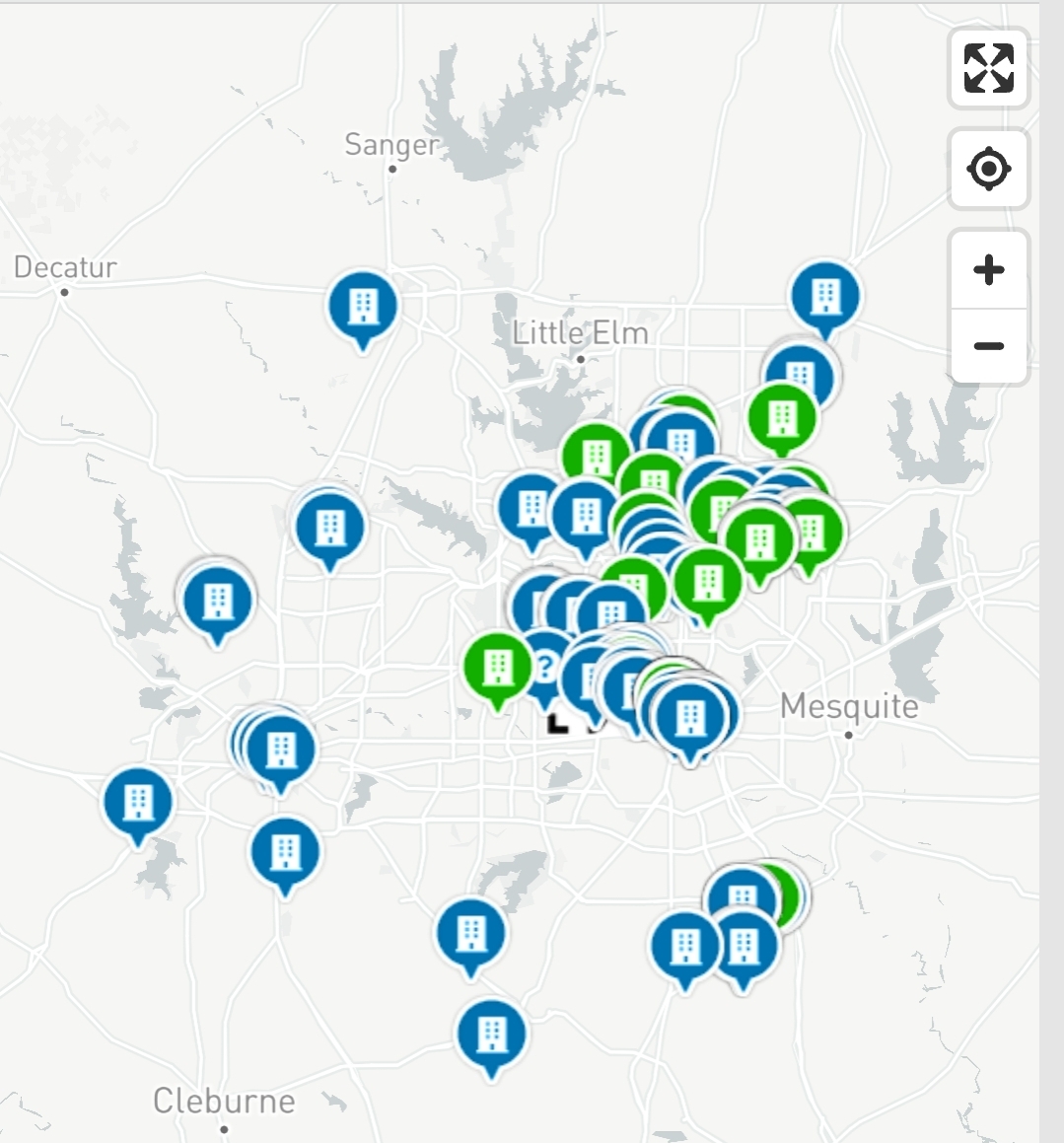
The image above shows a portion of the 184 data centers being built in the Dallas, Texas area alone.
The timeframe for this transition appears to be accelerating. With Donald Trump already militarizing law enforcement in DC, we could see a scenario where rioting breaks out, leading to military police control in New York, LA, and Washington. Once the chaos settles, the message becomes clear: “To keep anything like this from happening again, we need to implement a new system.”
But here’s the darker reality, it may not matter whether people realize it’s manipulated or coordinated. They appear to be past the point of caring what American citizens think about much of anything.
If the power structure has reached the point where they no longer feel constrained by public opinion, the entire calculus changes. They wouldn’t need to carefully orchestrate events to look organic, they could be fairly obvious about it. The AI governance pitch wouldn’t need to be persuasive in a traditional sense; it would just be presented as fait accompli after the previous system has been dismantled.
The Infrastructure Evidence

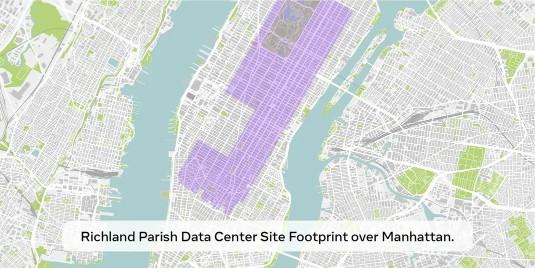
Graphic above shows Mark Zuckerberg’s massive data center over laid on a map of Manhattan.
Perhaps the most compelling evidence for this theory lies not in political theater, but in the massive infrastructure build out happening across the country. Tech titans are constructing gigantic, city-sized data centers nationwide, despite a shrinking economy, declining population, and lower birth rates. Who exactly is supposed to use all this data capacity?
Mark Zuckerberg has announced plans for multiple centers the size of Manhattan. Let that sink in: Manhattan is 23 square miles. Even accounting for hyperbole, we’re talking about computational capacity that dwarfs anything currently needed for social media, VR, or even the most ambitious publicly known AI training.
Sam Altman, Elon Musk, and Zuckerberg’s companies are spending billions on these facilities. The scale of investment against realistic revenue projections from civilian usage simply doesn’t add up under normal market logic. When you examine the numbers, there’s virtually no return on investment visible, unless they’re being built for the government, and these tech leaders are merely the public faces of government sponsored operations.
The Numbers Don’t Lie
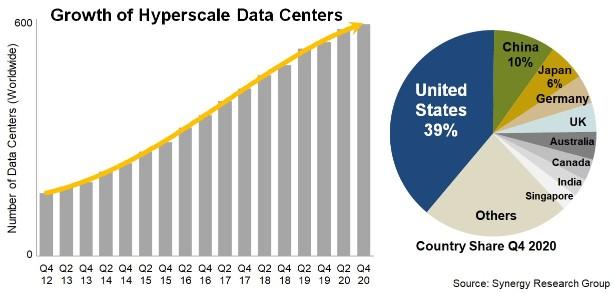
The actual construction data reveals the true scope of what’s happening:
Northern Virginia remains the epicenter, with over 9 gigawatts of capacity planned through 2030. Loudoun County alone already handles 70% of all U.S. internet traffic. This isn’t growth, it’s the construction of a digital command center.
Texas has exploded past Silicon Valley to become the second largest data center market, with over 300 megawatts under construction and nearly 90% already pre-leased. Who pre-leases data center capacity years in advance at this scale? Normal businesses don’t operate that way.
The Southeast is seeing over 2.2 gigawatts planned for Georgia alone, with multi-billion dollar hyperscale developments across South Carolina, Louisiana, and Virginia.
Amazon is dropping $2 billion on a single facility in Ohio. Google has $2 billion projects in Indiana and Nebraska. Meta has facilities rolling out across Indiana, Minnesota, Wyoming, Alabama, Louisiana, and South Carolina, all scheduled for 2025-2027.
This isn’t market driven expansion. This is government infrastructure deployment on a timeline.
The Pattern Emerges
The simultaneous timing across all these tech leaders is suspicious. In normal markets, you’d expect staggered investment as companies respond to different signals and opportunities. But coordinated massive infrastructure build out suggests they’re either all responding to the same non-public information, or following a shared directive.
The geographic distribution is equally telling and strategically brilliant. These data centers aren’t appearing randomly; they’re being positioned for maximum coverage and resilience:
Northern Virginia – The internet choke point, controlling 70% of US traffic flow.
Texas – Independent power grid (ERCOT) providing insulation from federal grid control
Southeast – Cheap power and business-friendly policies for long-term operations
Midwest – Central positioning for optimal nationwide coverage
Southwest – Climate resilience and disaster-resistant zones
This isn’t what market optimization looks like. This is national infrastructure planning. The emphasis on “low disaster risk” and “disaster-resilient zones” isn’t typical for normal commercial data centers. This is infrastructure designed to survive and maintain operations during national emergencies.
The “why multiple” question regarding Zuckerberg’s facilities becomes even more revealing when you see this nationwide pattern. One massive facility might be explained as future-proofing. But when every major tech company is simultaneously building multiple redundant facilities across strategically distributed geographic regions, you’re looking at something that resembles a backup government infrastructure.
Most telling of all, nearly 90% of the Dallas-Fort Worth capacity is already pre-leased, years before completion. This suggests guaranteed customers with massive, predictable computational needs that don’t currently exist in the civilian market.
So who exactly is pre-leasing all this capacity? When you dig into the reports, they’re weirdly vague about it. You get generic terms like “hyperscalers,” “cloud providers,” and “AI/ML companies” as the primary customers. Press a little harder and the usual suspects emerge: Amazon Web Services, Microsoft Azure, Google Cloud Platform, and Meta. But here’s the thing that caught my attention: the exact breakdown of who’s leasing what capacity where is kept confidential.
Think about that for a minute. When has Amazon ever been shy about announcing a major business expansion? These companies normally can’t wait to brag about their infrastructure investments. But suddenly, when it comes to these massive data center pre-leases, everything’s hush-hush.
The fact that these same tech giants are simultaneously pre-leasing enormous amounts of computational capacity across strategically distributed locations, while keeping the specific arrangements under wraps, doesn’t look like normal business competition. It looks like coordinated infrastructure deployment.
The Convergence
When you combine the impossible scale, the redundancy planning, the coordination, and the disconnect from apparent market demand, it points toward infrastructure being built for a completely different purpose than publicly stated.
The computational power being built could run the kind of AI systems that would be needed to GOVERN an entire population, not serve it.
This infrastructure build out is happening precisely as political dysfunction reaches unprecedented levels, and as the public loses faith in traditional governance. The timing isn’t coincidental.
The setup becomes clear. Create sufficient chaos and dysfunction to make any alternative seem appealing, build the infrastructure necessary to implement that alternative, then reveal the “solution” that’s been waiting in the wings all along.
Whether this theory proves accurate or not, the infrastructure is real, the investment is massive, and the justification based on current civilian demand simply doesn’t exist. Something significant is being prepared, and it’s happening on a timeline that suggests we’ll know what it is well before 2030.
The question isn’t whether this infrastructure will be used for something beyond current civilian applications. The question is what that something will be, and whether we’ll have any choice in the matter when it’s finally revealed.