I take no pleasure in this one. I like the guy. But what’s true is true.
There are two types of people in showbiz: those who claw their way up from the trenches and those who, despite the optics of struggle, always seem to find themselves exactly where the machine needs them to be. So where does Theodor Capitani von Kurnatowski III fall?
Article begins below.
On the surface, Theo’s story bleeds hardship. Homeless at 14. Raised by an aging father and an absent, overworked mother. Lost in the chaos of a family too poor and too distracted to give him the attention he needed. Toss in electric shock underpants for bedwetting trauma and it’s the kind of origin story Hollywood screenwriters would toss for being too on the nose.
But then things get… convenient.
At 19, Von just so happens to be plucked off a college campus for MTV’s Road Rules, the same MTV that’s functioned as a talent farm for decades. Don’t forget, Road Rules and The Real World were under Viacom, a media behemoth with deep ties to other cultural influence arms. So the guy who had no career goals suddenly gets nudged into national visibility by a producer who tells him, “You should move to L.A. You could be an actor.” No backstory. Just vibes.
That alone wouldn’t raise eyebrows if the pattern didn’t continue.
Despite the MTV baggage (which Von claims hurt his chances in “serious” entertainment), he lands multiple hosting gigs, Yahoo’s Prime Time in No Time, the hidden camera show Deal With It, and various comedy appearances. Somehow, the reality TV albatross doesn’t strangle his momentum. It just… delays it. Then, like clockwork, the podcast boom hits, and suddenly Theo finds his voice. Right as the mainstream begins co-opting podcasting as a platform for curated dissent.
This is where the timing gets suspect.
Von’s style is tailor-made for the modern media environment: vulnerable, “real,” vaguely countercultural but never dangerous. He pushes trauma, not truth. He’s a master of safe subversion, the kind that wins hearts without threatening power. Think about it: who’s more useful to the machine? A blowhard conspiracy theorist? Or a lovable sad clown with a checkered past and just enough trauma to make him seem real?
Let’s break it down:
Background checks out: His pain is authentic. That’s the bait. It disarms you.
No real political stance: He floats between sincerity and absurdity, always avoiding sharp edges.
Manufactured underdog energy: He’s always the guy who just missed his shot, until he didn’t.
Perfect pipeline credentials: Reality TV, Viacom, Yahoo, now podcasting. All heavily curated platforms.
And here’s the kicker: he’s become a gatekeeper of relatability. He tells the kind of stories that bond people to him emotionally. Once bonded, they trust his worldview. And while his worldview doesn’t tell you what to think, it sure as hell narrows what you’re allowed to laugh at, question, or see.
If you were designing a media asset to control the “comedian as truth-teller” lane without the danger of real political disruption, you’d probably end up with someone like Theo Von.
Theodor Capitani von Kurnatowski III.
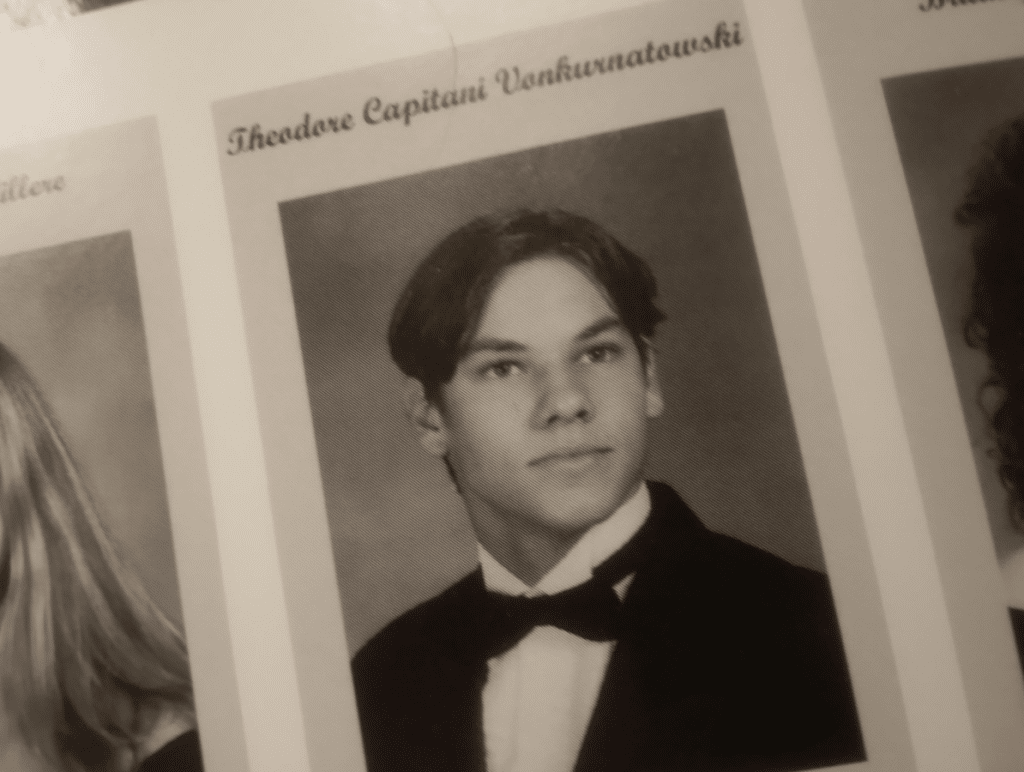
Theo’s family lineage traces back to actual European aristocracy. His grandfather was part of the Polish noble class, and his surname is tied to royalty. This isn’t speculation; Von Kurnatowski is a known noble bloodline. For years, this detail was completely absent from his public persona.
And yet, the man who publicly branded himself as a dirt-poor Louisiana kid with no help or privilege just so happens to be literal royalty.
So, let’s look deeper into Theodor Capitani von Kurnatowski III.
Yeah… you’ll notice that’s not a stage name. It sounds like it belongs to a 19th-century Prussian baron who time-traveled into Louisiana. Which, in a way, he kinda did.
Theo Von was a Regional Yo-Yo champion
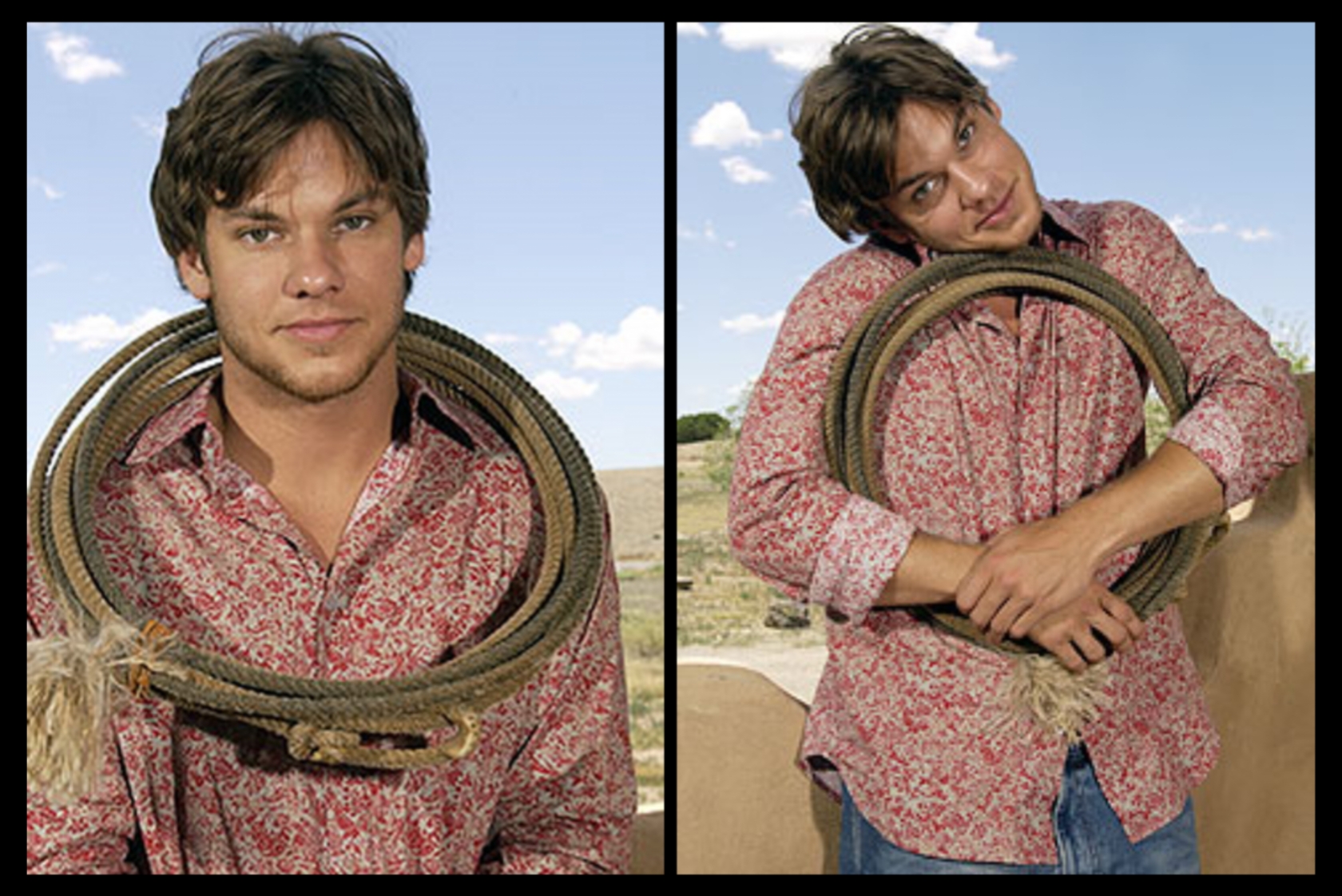
Before we dive into the weirdness surrounding Theo, here’s a little-known fact that he’s mentioned on several podcasts. As a teenager in Louisiana, Theo Von was already a showman in a surprising way: he claims to have gained attention as a competitive yo-yo player, winning regional contests and developing the stage presence that would later define his comedy. It’s a small detail, almost charming, but it shows his knack for performance early on.
Blue Blood in the Bayou:
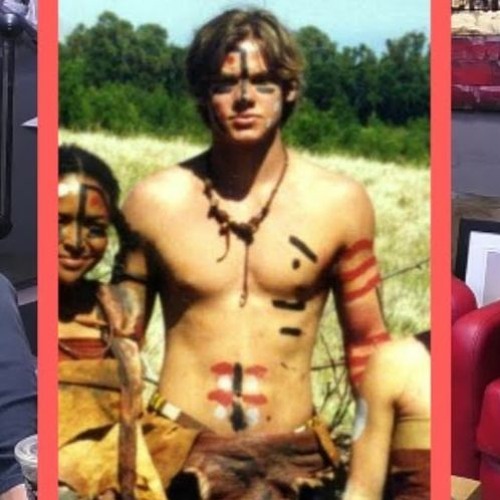
Theo Von’s fancy surname isn’t just for show, he literally hails from aristocracy. His grandfather was part of the Polish szlachta (noble class), meaning Theo is descended from a Polish noble family dating back centuries.
In other words, royalty runs in his veins. Yet this blue-blood background was nowhere in the comedy riffs about his dirt-poor Southern upbringing until internet sleuths unearthed it. Only after a viral Trump interview in 2024 did the world learn that Theo’s family line “has been highly prominent for centuries” in Polish politics.
It turns out the ultimate relatable Southern everyman is, by birth, a von Kurnatowski, a name tied to counts, palaces, and even a feudal family motto (“We swim in the blood of our enemies” – no joke). Hardly the heritage of a humble bayou drifter.
Tim Dillon: “The Podcast Pig” Who Just Happens To Be A CIA/Intel Plant
Family Secrets and Convenient Omissions:
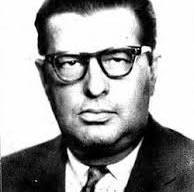
Theo’s father, Roland von Kurnatowski Sr., was 67 when Theo was born and hailed from that noble Polish-Nicaraguan lineage. The family narrative, however, downplays any hint of privilege.
In fact, there are whispers (unconfirmed, but intriguing) that Theo’s dad was not the “poor welder” one might imagine but actually a stockbroker, and that PR teams allegedly scrubbed public records to keep it quiet.
What we do know: Roland Sr. was effectively exiled from his wealthy family, who wanted nothing to do with young Theo, his mom, or his siblings.
When the elder von Kurnatowski died in 1996, his obituary didn’t even list Theo as a surviving son, that branch of the family tree was practically erased. It’s a real Batman origin: the heir to an aristocratic bloodline grows up feeling like a pauper because the family fortune (and name) shuns him.
Whether or not there was a conscious cover-up, it’s one hell of a coincidence that a comedian who built his persona on being a poor misfit just so happens to have a noble pedigree nobody knew about for years.
Neighbors in High (and Low) Places:
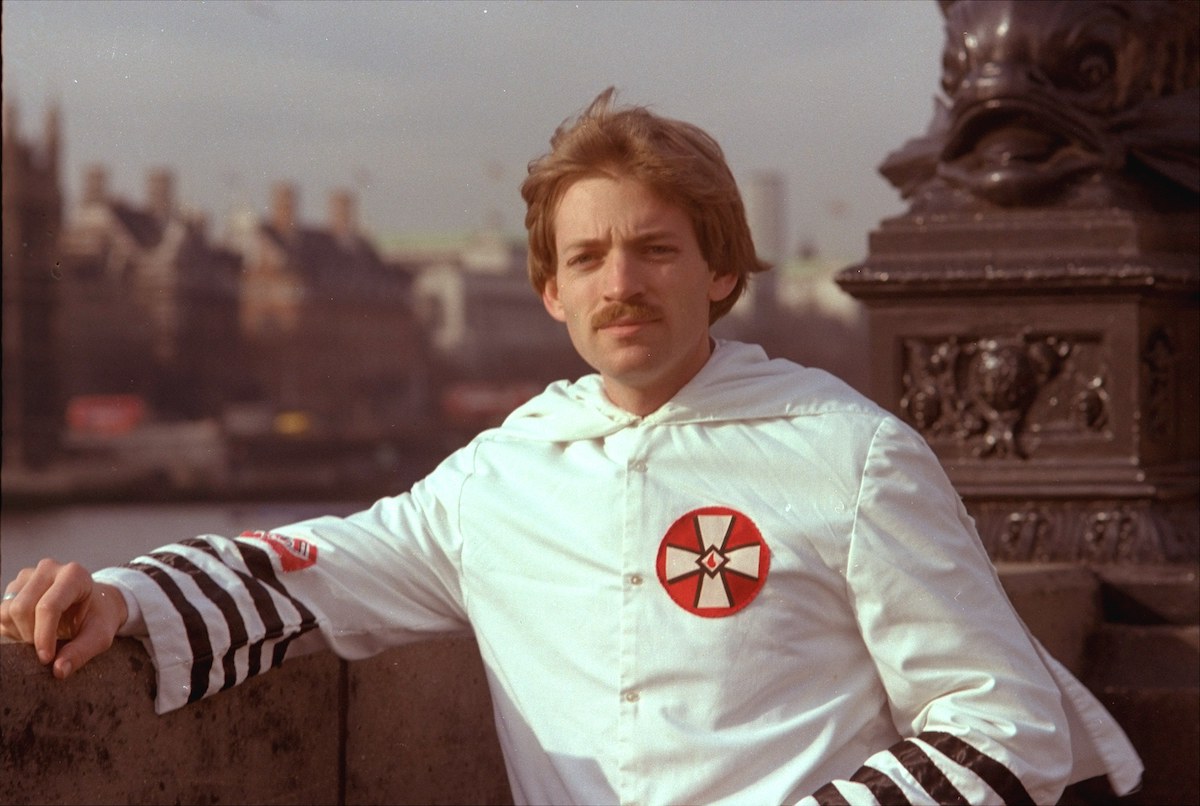
After emancipating himself at 14, young Theo bounced around friends’ houses, and one of those friends just happened to live behind David Duke. Yes, that David Duke, the former KKK Grand Wizard and Louisiana politician. As bizarre as it sounds, Theo has openly talked about sharing a back fence with Duke and even hitting the gym with him and his girlfriend.
Duke himself has recalled the teenage Theo living next door. Now, consider the optics: a kid who portrays his upbringing as destitute somehow ends up living in a neighborhood next to one of the most notorious figures in Louisiana. Duke wasn’t residing in the poor part of town, to put it mildly. So how does a supposedly penniless 14-year-old orphan land in that zip code?
Reportedly, a “wealthy family” took him in after he left home. In other words, behind the scenes of the hard knock life narrative, there was a safety net of affluence guiding him through high school in an upscale community (Mandeville, LA). The odds of growing up literally next door to a power player like Duke by mere chance are astronomical, unless the circles around Theo weren’t as small-time as we’ve been led to believe.
Tim Dillon: “The Podcast Pig” Who Just Happens To Be A CIA/Intel Plant
Theo’s Education Escapade:
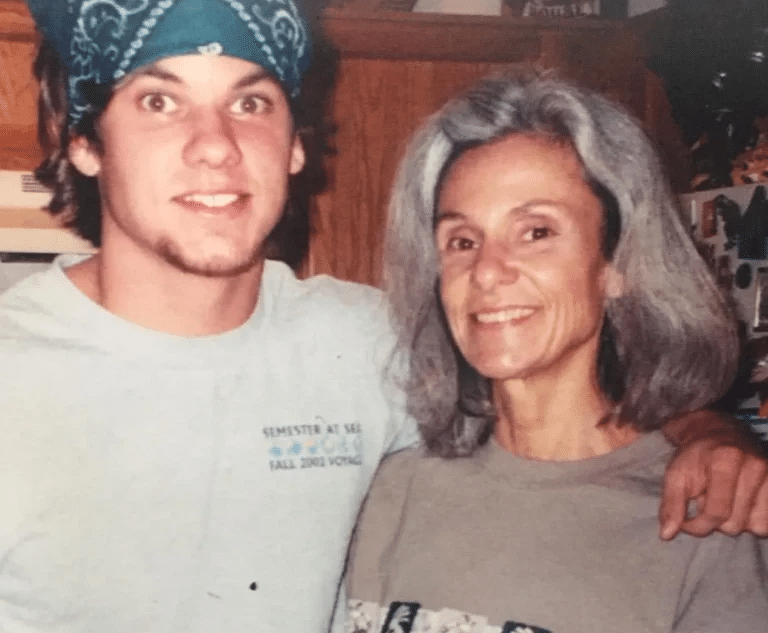
Here’s a head-scratcher, Theo Von, an emancipated teen with allegedly scant resources, managed to attend seven different colleges and universities before finally getting his degree. Seven. He racked up over 300 credit hours in the process.
For comparison, a typical bachelor’s program is 120 credits; Theo earned nearly triple that, essentially burning money on extra courses and school transfers like it was no big deal. He bounced from LSU to Loyola to the University of Arizona to College of Charleston to Santa Monica College, and ultimately got a degree from the University of New Orleans in 2011. His explanation? He admits he “kept jumping around to different colleges” mostly because he “wanted to travel” and have fun.
That’s a luxury few working-class kids could ever dream of. Class-hopping across state lines and even doing a Semester at Sea at the suggestion of a TV producer isn’t your standard community-college-night-school-for-the-poor-kid story.
Whether it was MTV money from his early TV gigs or quiet help from somewhere, this collegiate odyssey doesn’t square with the narrative of a broke 20-something struggling to find himself. It does, however, sound exactly like the kind of worldliness an entertainment handler would want in their protégé, connections, experiences, and a foot in many doors.
Plucked from Obscurity – Right on Cue:
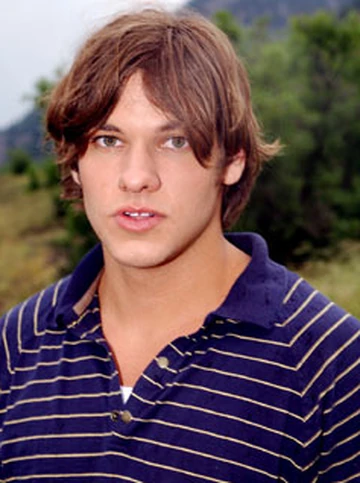
Theo often frames his big break as a fluke: a college kid randomly gets cast on MTV. But was it pure luck or a perfectly timed insertion into the industry machine? In 2000, while at LSU, 19-year-old Theo was literally recruited on campus for Road Rules. He says a producer spotted him walking across the quad and invited him to audition. Next thing you know, he’s on national TV, competing in challenges and confessing to a camera.
Consider how convenient that is. MTV (owned by Viacom) in the early 2000s was a star factory, a grooming ground for young talent to plug into larger media pipelines. Theo had no acting or comedy resume to speak of – yet he slid right into a Viacom show that, by design, turns nobodies into influencers overnight.
It’s the classic pipeline: MTV reality show today, Comedy Central tomorrow, a Yahoo web series the next. Theo’s reality-TV stint led to him becoming a repeat face on MTV’s spin-offs (The Challenge seasons), then on to semi-finals of NBC’s Last Comic Standing, and even winning a Comedy Central competition show (Reality Bites Back in 2008).
It’s as if once he got scooped up by that first casting director, the machinery kept finding slots for him. Many reality contestants flame out; Theo kept getting deals. The Road Rules launchpad might seem like happenstance, but it fits a pattern of Theo being exactly where industry gatekeepers needed him to be, time and again.
Podcasting at the Perfect Moment:
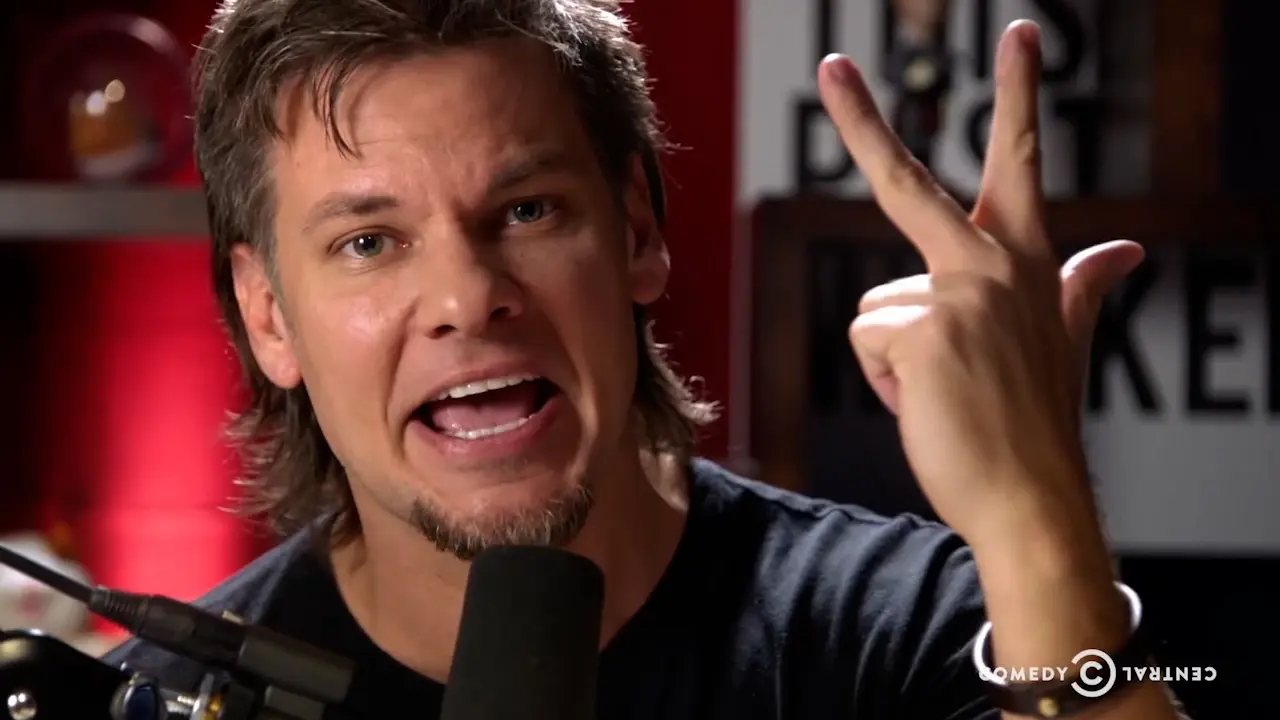
Just as podcasting became the new frontier for unfiltered “truth-tellers,” Theo Von found his stride with This Past Weekend. He launched the podcast in 2016 and rode the wave of the format’s surge in popularity. By 2024, his show was the 3rd most popular podcast on Spotify in the U.S., pulling in millions of viewers and followers across YouTube, TikTok, and Instagram.
He’s had heavyweight guests like Joe Rogan, Alex Jones, Roseanne Barr, Jordan Peterson, and even scored an interview with Donald Trump in 2024, which skyrocketed his reach.
In an era where the establishment realized it needs a handle on “alternative” media, Theo’s podcast occupies a sweet spot. It’s edgy enough to attract those disillusioned by legacy media, but not so radical as to get him deplatformed. He’ll earnestly swap drug stories with Trump or joke about conspiracy theories, yet you’ll notice he seldom takes a firm stance that could truly alienate sponsors or invite censorship. It’s all just interesting conversation, never agitation.
In effect, Theo’s podcast persona delivers the feeling of dissent without the cost of it. And low and behold, mainstream recognition followed.
The Associated Press now labels him a “manosphere” podcaster riding shotgun with Trump, a sign that he’s considered a figurehead of a sanitized counterculture.
When corporate media starts tagging you as a leader of the pack, you’re not really an outsider anymore. Theo’s role in the podcast boom seems almost scripted: he became the relatable, unthreatening voice that big platforms are all too happy to boost.
The Gatekeeper of “Realness”:
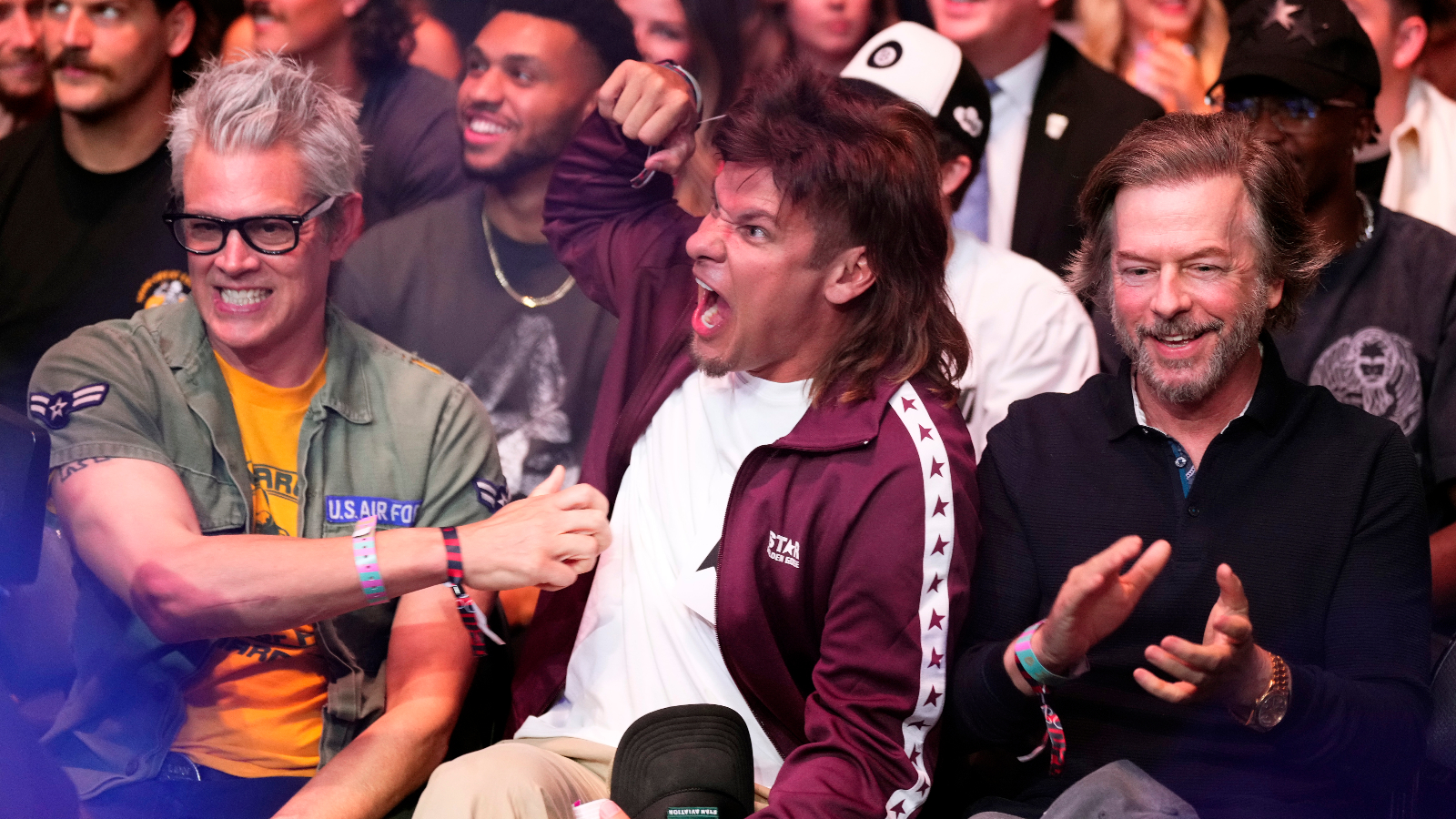
Perhaps the most insidious coincidence of all is how perfectly Theo Von’s persona aligns with what the powers-that-be would want in a countercultural icon. He has just enough trauma in his past to appear authentic and earnest, hooking in viewers who crave “real talk,” yet he steers that authenticity into apolitical, non-threatening territory. He’ll tear up about personal pain or wax poetic about overcoming hardship, which builds trust and loyalty with his audience.
Once people are emotionally bonded to Theo, he subtly defines the boundaries of acceptable discourse. Fans get their fix of irreverence and catharsis, but notice how the Overton window of Theo’s comedy stays narrow. He doesn’t encourage you to question corporate power or challenge systemic narratives; he encourages you to laugh, cry, and move on.
It’s comedy as therapy, not comedy as provocation. That makes him invaluable to the machine. He occupies the “comedian truth-teller” slot without ever truly threatening the interests of the elite. You won’t hear him endorsing any political movement (left or right) in a serious way, he’s pointedly non-committal, a self-described clown who “doesn’t know much about politics.” This lack of clear stance is by design. It ensures he can serve as a unifying figure, someone both edgy teens and middle-aged suburbanites feel comfortable with.
In the end, Theo Von’s “realness” feels curated. It’s the kind of realness that keeps audiences docile, laughing at fart jokes and tearful stories, never asking uncomfortable questions of the status quo. Exactly what a media handler would order up in a time of growing public distrust.
Then comes the real kicker.
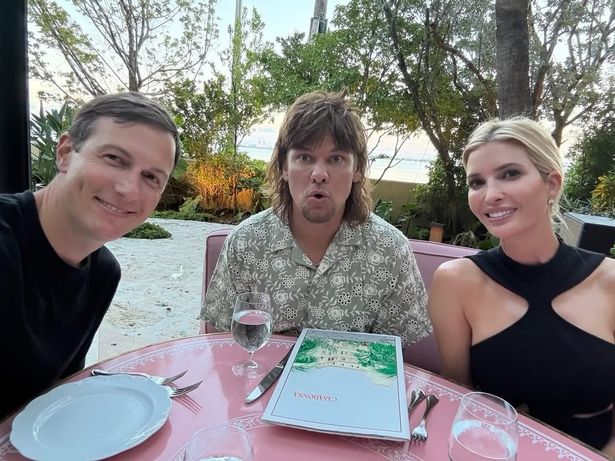
Theo Von eats dessert with Ivanka Trump and Jared Kushner. He gets flown to Qatar to perform for U.S. troops where Donald Trump himself introduces him and praises his podcast. He hosts J.D. Vance, who casually mentions the Epstein list. He interviews OpenAI CEO Sam Altman, not with journalistic skepticism, but with philosophical reverence.
He is the most famous unthreatening man in America. And that might be exactly the point.
None of this proves he was planted. But it does show that his journey was made frictionless at every critical junction. It raises questions about what kind of asset looks like an outsider but moves like an insider.
Theo Von is still the guy who tells stories about animal carcasses thrown in a ditch by a school bus driver, bedwetting devices and old perverted men behind the bowling alley. But somewhere behind that good ole boy persona is a name etched on a crest, a gate code that never changes, and a private line to the kind of people peasants like you and me can’t even imagine meeting.
And that’s exactly why this had to be written.
After Subscribing below, Read Next:
Tim Dillon: “The Podcast Pig” Who Just Happens To Be A CIA/Intel Plant
Is Andrew Schulz the Pied Piper or a Trojan Horse? Yes & Yes!
Candace Owens: The CIA’s Controlled Opposition Narrative Seeding Specialist