Rebellion for Sale: The National Security Operation That Turned Elvis Presley Into a Prototype for Mass Compliance.
Authors Note: I’ve received the warning that this post is too long for email. You may have to visit the webpage to read it in full. Sorry for any inconvenience.
If you haven’t already, read Volume 1 of Comedy as Propaganda here.
Before Johnny Carson, Mitzi Shore, or Joe Rogan, there was Colonel Tom Parker, the carnival handler who turned Elvis Presley into America’s first controlled rebellion. This volume exposes how the “King of Rock ‘n’ Roll” became the prototype for modern propaganda: rebellion for sale.
The Blueprint:
Edward Bernays and Engineering Consent
Edward Bernays, who just happened to be the nephew of Sigmund Freud, did more than just write a book when he published Propaganda in 1928; he laid bare the machinery of mass psychological control. ¹
His central, revolutionary insight was that you do not control a population through force, but by appealing to its deep, often unconscious, desires.
Bernays taught the world how to manage the “herd instinct” by getting people to want what their controllers wanted them to want.
He named this process as “the engineering of consent” and it involved five simple steps.
How To Engineer Consent
Identify the herd instinct – Find what people desperately want to feel or believe
Create a symbol – Give them something to attach those feelings to
Attach the product – Hide your real goal behind the symbol
Saturate mass media – Make the symbol inescapable
Redirect the energy – Once they’re invested, point them where you want them to go.
In 1929, Bernays proved his theories worked.¹³
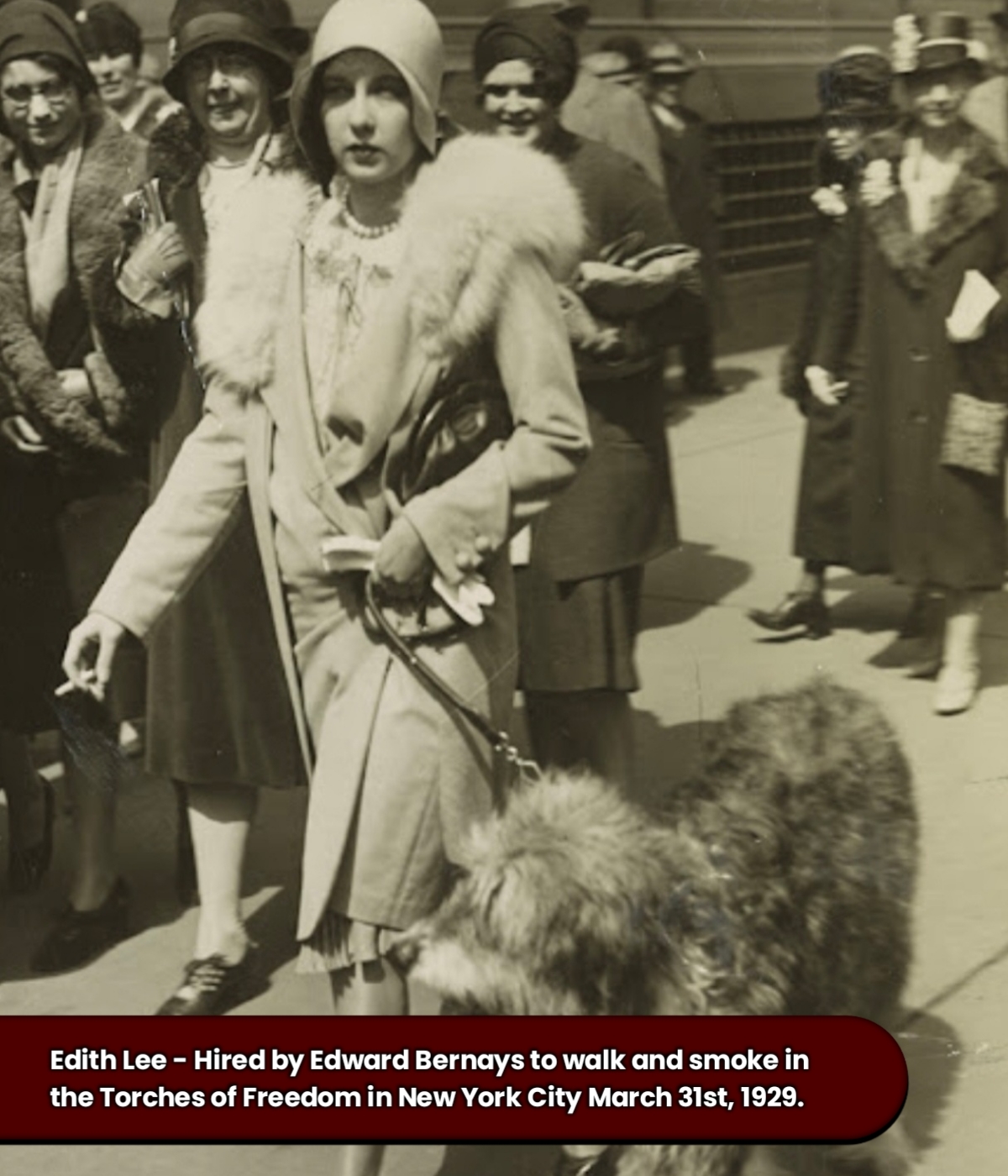
Before New York City’s Easter parade, Bernays tipped off reporters that a group of “suffragettes” would ignite “torches of freedom” in defiance of women’s subjugation.
As the parade unfolded, the women lit their cigarettes, a moment captured in photographs and broadcast worldwide. The spectacle proved a triumph for the American Tobacco Company. ²
Overnight, smoking became synonymous with feminism. Women’s liberation became a tobacco marketing campaign.
Sales exploded.
By the 1950s, Bernays’s methods had become standard practice in corporate boardrooms as well as Western intelligence agencies. ³
The Office of Strategic Services (OSS) studied his methods closely, and by the time the agency re-emerged as the Central Intelligence Agency (CIA), they had already perfected the art of engineering consent. ⁶
Colonel Tom Parker would take the same methods and apply them in service of something much more vital to the CIA and the US government than selling records.
Defeating the Soviet Union.
The Cold War Context:
Bombs carve scars in the pages of history, yet he who wins the most minds authors the pages.
Why Youth Culture Became a National Security Priority
To understand why Elvis was crucial to the power brokers operating in the shadows, we first need a quick refresher on 1950s America.
It helps to see the Cold War for what it really was. The tanks and missiles got the headlines, but the real fight played out through culture.
Movies, music, news, classrooms, comedians, magazines, all humming with quiet persuasion. Power wasn’t just measured in warheads. It was measured in how many minds you could tilt without them noticing the angle
Like the propaganda poster from 1957 below. Main: “THEIR ABUNDANCE IS FOR RICH PEOPLE ONLY. WE STRIVE FOR ABUNDANCE FOR EVERYONE.”

Top left: “About 20 million Americans do not have the means to buy more than one liter of milk per month or consume more than 6 kilograms of meat per year.”
The Soviet Union sold the world a vision of equality and anti-imperialism, and America had to respond without looking like the enemy. If communism seemed more appealing, nations would drift toward the Soviet orbit.
Culture became the weapon. Jazz, Abstract Expressionism, Hollywood, even Elvis Presley, they weren’t just art or entertainment. They were proof that capitalism could produce freedom, creativity, and prosperity in ways communism could never touch.
America’s Problem:
The youth in America were restless.
Post-war prosperity had created the first generation with disposable income but no war to fight, no depression to survive, no clear enemy to unite against.
They had energy, hormones, and economic power with nowhere to direct it.
This was dangerous.
Youthful energy, historically, fuels revolutions. The Soviets knew this. They actively recruited through communist organizations at universities, labor movements, and cultural exchanges.
If American teenagers became genuinely rebellious (against racism, militarism, economic exploitation, imperial foreign policy), they could destabilize the entire Cold War project. Not to mention throwing the United States’ plan to dominate the world.
Then came August 10th of 1956. When a little known white boy singing “black music” performed in Jacksonville Florida. “White kids” were stirred into such a frenzy it shook the government to its core.
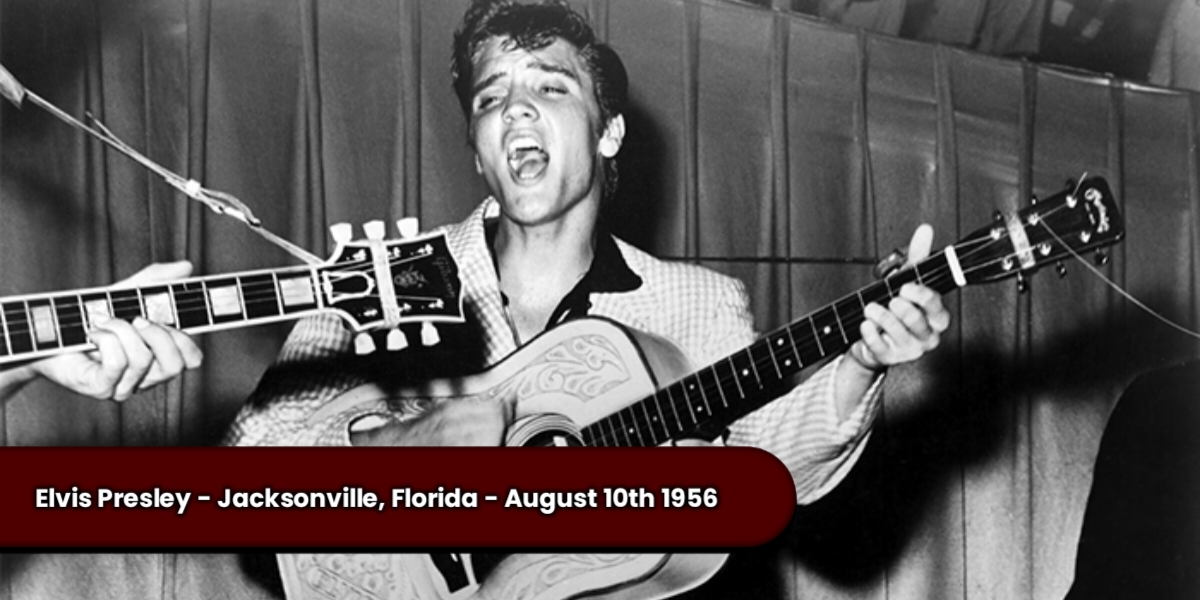
In the mind of government leaders, Elvis was a genuine threat to the racial and social order of the time, justifying the extreme governmental reaction.
A local judge threatened to jail Elvis if he dared move his hips again.
The near-arrest, and the international media attention it garnered, was a clear signal to the power structures that suppression was failing, and redirection was desperately needed.
They realized suppression would only create martyrs.
They needed something new.
What they chose was to adapt the mass celebrity control techniques perfected in Hollywood by figures like Charlie Chaplin (selling patriotic compliance) and Shirley Temple (selling manufactured optimism), and apply them to the crisis of youth rebellion.
If the youth wanted a rebellion, they’d give them a rebellion.
What if you could give American youth a rebellion that felt real but threatened nothing?
What if you could create a new consumer identity that channeled their energy into buying merchandise to help fund their own mental conditioning?
What if you could make them feel like revolutionaries while actually training them to eventually serve the state?
This wasn’t a business opportunity in the usual sense. It wasn’t about record sales, box office numbers, or ticket profits.
The stakes were bigger, hiding in plain sight.
This was a national security operation.
Stabilizing culture became an intelligence priority.
Young adults were getting out of control.
A new kind of weapon was needed.
Elvis Presley was the prototype.
Colonel Tom Parker was its mastermind.
The Carnival Operator With Impossible Protection
Colonel Tom Parker wasn’t a music man. He was a psychological manipulator who understood crowds the way a pickpocket understands distraction.
Before he invented Elvis Presley, Colonel Tom Parker invented himself.
He was carefully curated enigma in a rumpled suit, he buried his past beneath a carny’s patter. His resume was pure American sideshow: traveling carnivals, elephant handler, manager of a palm-reading booth. It was the perfect schooling for a man whose genius lay not in music, but in the mechanics of myth.
Parker wove an origin myth worthy of a novel: an orphan from the West Virginia hills who fled to the circus. The world accepted his tale. A simple inquiry would have shattered it.
No birth record existed for a Thomas Parker in Huntingdon.
He famously traveled nowhere that required a U.S. passport. And his vaunted military title? An honorarium from a Louisiana governor, bestowed for political favors rendered to a singing candidate.
Born Andreas Cornelis van Kuijk in the Netherlands, he entered the United States illegally, most likely in 1929. He had no papers, no legal status, no documentation. At some point, he may have briefly served in the U.S. Army before deserting. By all conventional logic, this man should have been deported or prosecuted over a thousand times.⁴
Instead, he became the most powerful manager in American entertainment.
Take a second to sit with that.
An illegal immigrant and probable deserter was allowed to control the nation’s biggest cultural asset during the height of the Cold War. He had access to television networks, film studios, military bases, and the minds of an entire generation of teenagers.⁵
How?
Parker’s background remains murky to this day.
We don’t know how he entered Hollywood.
We don’t know who funded his acquisition of Elvis.
We don’t know who protected him from immigration enforcement for his entire career.
What we do know is that he worked simultaneously as a consultant for RCA Victor and Hollywood studios while managing Elvis.
This was also illegal.
He was being paid by multiple parties with conflicting interests.
Yet he was never prosecuted.
The consultant role is key.
It’s how intelligence operatives embed in entertainment industries today. They provide “expertise” to corporations while shaping content and selecting talent. Parker’s triple-agent status (representing Elvis while serving corporate and likely government interests) fits this model perfectly.
Consider the organization he infiltrated: RCA Victor.
Its parent company, the Radio Corporation of America (RCA), was founded in 1919 at the direct request of the U.S. Navy to consolidate American radio patents and guarantee U.S. control of communication technology.⁷
This means that functionally it was a US government asset.
Which means if we follow that line of thought. It means the men around the big table for RCA were employed by US intelligence. The head of this corporate giant was a man named David Sarnoff.
For readers who buy into the theory that a certain religious group rules the world, David Sarnoff should be of special interest. Sarnoff was a Russian-born American Jew who rose to become a Brigadier General in the U.S. Army Signal Corps Reserve, and was widely known thereafter as “The General.”
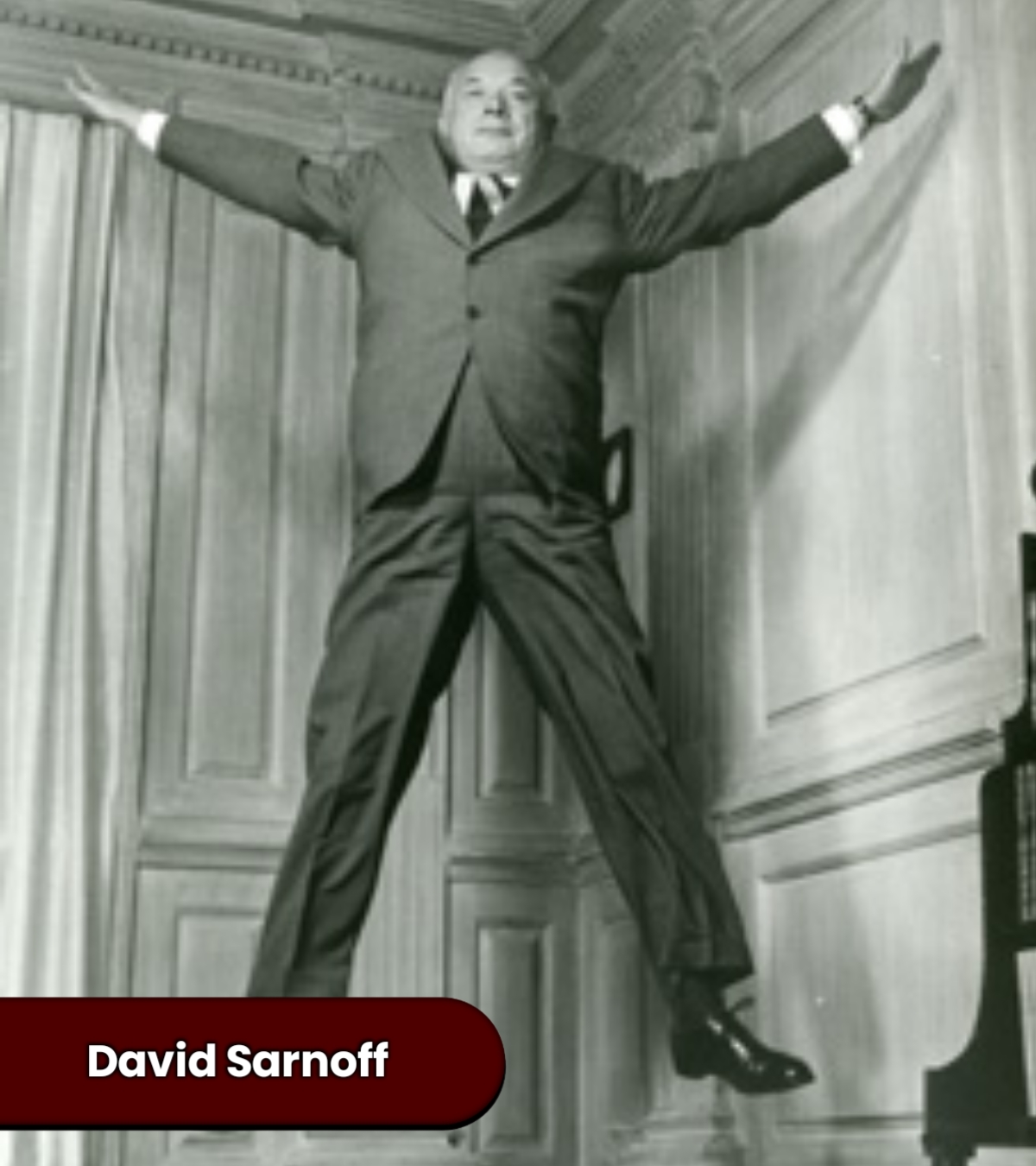
This military rank, combined with his control of RCA, gave him direct, high-level ties to the U.S. military and intelligence infrastructure, linking him directly to national security objectives.⁶
Tom Parker, the illegal immigrant and probable deserter, was somehow allowed to operate at will as an internal consultant right inside this corporate-military-media nexus.⁹
Once you understand that RCA was functionally a US government asset and that Tom Parker worked as a “consultant” for this “company.” The mystery of who Parker really worked for, and who was protecting him, gets a little less mysterious and becomes far more likely that he was an intelligence operative from the start.
And here’s another tell: Elvis’s career was famously kept domestic.
While Elvis did perform a few concerts in Canada in 1957, which Colonel Parker was by his side for every one. This brief anomaly, a trip across the land border of a close ally that did not require a full passport, was the last time Elvis ever played outside the U.S. Parker was offered millions of dollars for overseas tours, yet he refused every one, using his contractual power to blackball any promoter who tried to bypass him.
In 1955, this man bought Elvis Presley’s contract from Sam Phillips for $40,000. An astronomical sum that suggested serious institutional backing.
There’s no doubt that after the Jacksonville concert, someone with serious resources wanted control of the kid making teenagers scream.
Once they had control of the asset, the plan was put into motion.
Step One:
Parker Identifies Post-War Teenage Desperation
Parker saw what no one else had articulated: American teenagers in the 1950s were suffocating in conformity but had money and hormones with nowhere to go.
They weren’t children anymore, but adult life was a script written by their parents.
The listened to their parents music. Wore their parents clothes and were expected to follow their parents rules.
They had purchasing power from post-war prosperity but no cultural identity of their own.
The herd instinct was screaming: give us something that’s ours, something dangerous, something our parents hate.
Parker recognized this wasn’t just a market opportunity. It was the raw material for a national security solution. If you could give teenagers a controlled rebellion, you could prevent a real one.
Step Two:
Manufacturing Elvis as Pure Symbol
Parker’s genius was understanding that Elvis the person didn’t matter. Elvis the symbol was everything.
So Parker did something no manager had ever done: he prevented Elvis from touring.
Read that again. The hottest performer in America, the kid everyone wanted to see, never went on tour. He appeared only on television and occasionally in New York or Los Angeles. That’s it.
This was Bernays 101.
Control access to control meaning. If Elvis performed everywhere, he’d become human, familiar, just another entertainer. But keep him on TV only, and he remains a projection screen. Teenagers could imagine anything they wanted onto him because they never got close enough to see reality.
Elvis was America’s first industry plant. A completely manufactured symbol designed in corporate boardrooms and intelligence offices, delivered through the newest mass medium: television.
Step Three:
Selling Fake Rebellion
Watch the early Elvis performances.
Every hip thrust is choreographed.
Every lip curl calculated.
The bedroom eyes practiced in mirrors.
This wasn’t spontaneous.
This was psychological warfare on a mass scale.
Teenage girls screamed, fainted, rushed stages.
Parents were horrified.
Preachers condemned him.
The entire time, Parker laughed, the moral panic was the point.
Parker was selling the forbidden. Elvis’s hips represented sexuality, freedom, loss of parental control. Everything teenagers wanted and parents feared. But here’s the trick: Elvis wasn’t actually challenging anything that mattered.
Just like Bernays’s “Torches of Freedom” made smoking seem like liberation while selling tobacco, Elvis made buying records seem like rebellion while keeping kids from questioning actual authority.
You don’t need to organize against segregation. You don’t need to think about the military-industrial complex. You don’t need to challenge American imperialism. Just buy the record. Move your hips. That’s rebellion now.
And because they couldn’t see him live, they bought merchandise instead. Shirts, posters, pins, anything with his face. Parker was rewiring American youth to express identity through consumption.
Essentially, sponsoring their own control.
The teenager was born as a consumer class, not a political force. Exactly what the designers of the Elvis op were hoping for.
This served Cold War objectives perfectly. Soviet youth were being mobilized for collective action. American youth were being trained to express themselves through purchasing decisions.
Step Four:
Television as Mass Psychological Operation
Parker understood Marshall McLuhan before McLuhan published: the medium is the message.
Television was perfect. Millions of teenagers watching simultaneously, experiencing manufactured hysteria together. This created the illusion of a movement. A cultural revolution. A generation finding its voice.
The Ed Sullivan Show. The Steve Allen Show. Milton Berle. Each appearance was an event. Each generated controversy (cameras famously shooting Elvis only from the waist up, which only amplified the sexual threat). Each controversy reinforced the message: this is dangerous, this is yours, your parents can’t stop it.
Before Elvis, “teenager” wasn’t a demographic category. You were a child, then an adult. Parker and his network created teenagers as a consumer class with its own identity, purchased through products that felt like rebellion.
The scarcity was the hook. The purchasing was the addiction. But rebellion was never the goal. Cultural stability was.
Step Five:
The Military Redirect
This is where Bernays’s technique reveals its brilliance, and where the Cold War objectives become unmistakable.
After screaming rebellion for two years, making teenagers follow his every command. The real objective of the Elvis psyop revealed itself.
In 1958, at the peak of his rebel image, Elvis got drafted.
And he went without complaint.
This wasn’t career suicide. This was the operation’s second phase.
The message landed perfectly for Cold War objectives: Real rebels grow up. Real men serve. Questioning authority is childish. Joining authority is mature. The military isn’t the enemy of youth culture, it’s where youth culture graduates to.¹⁰
Think about the timing. The Korean War had just ended. Vietnam was escalating. The military needed warm bodies and public support. What better recruitment tool than having the avatar of teenage rebellion model perfect obedience to the state?⁸
Elvis served in Germany, on the front lines of the Cold War. His service wasn’t just symbolic. It was geographic propaganda. American youth culture literally deployed to face the Soviet threat.
Then came the movies.
For a decade, Elvis starred in films that systematically reinforced every power structure his hips had pretended to threaten.
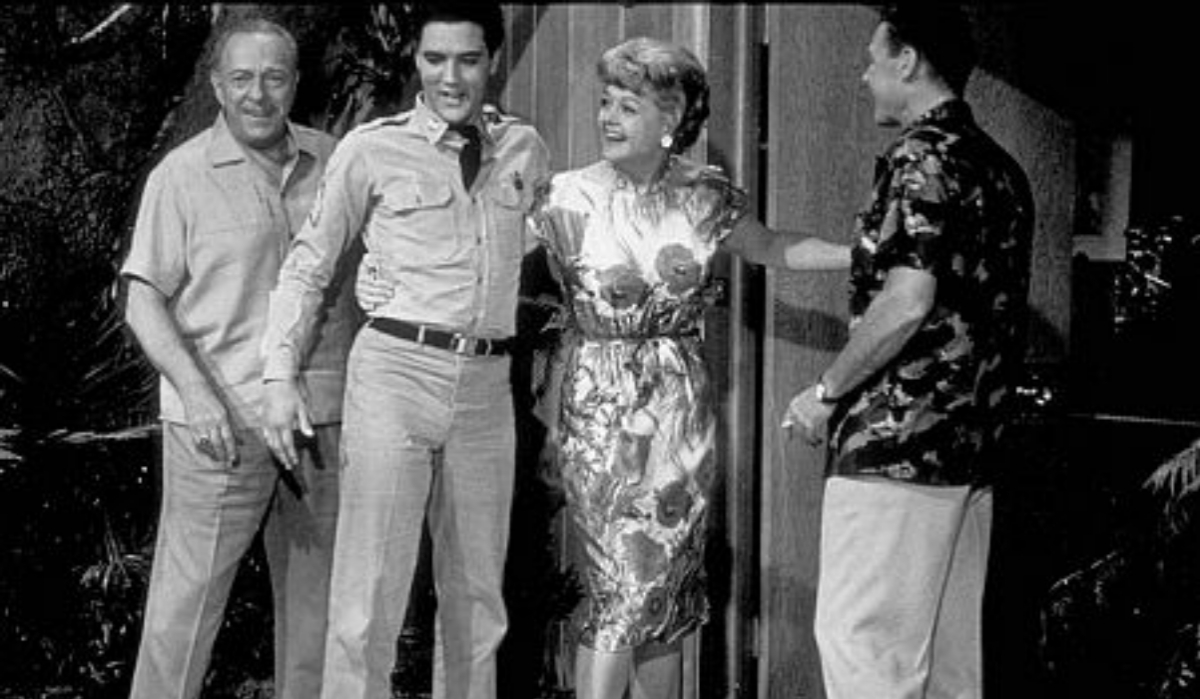
Blue Hawaii (1961): Soldier returns home to tourism, celebrating American economic expansion in the Pacific.
By portraying Elvis as a carefree former soldier who becomes a tour guide, it rebranded a strategic military territory (Hawaii) as a benign, consumerist paradise, teaching youth that American dominance equaled fun and leisure
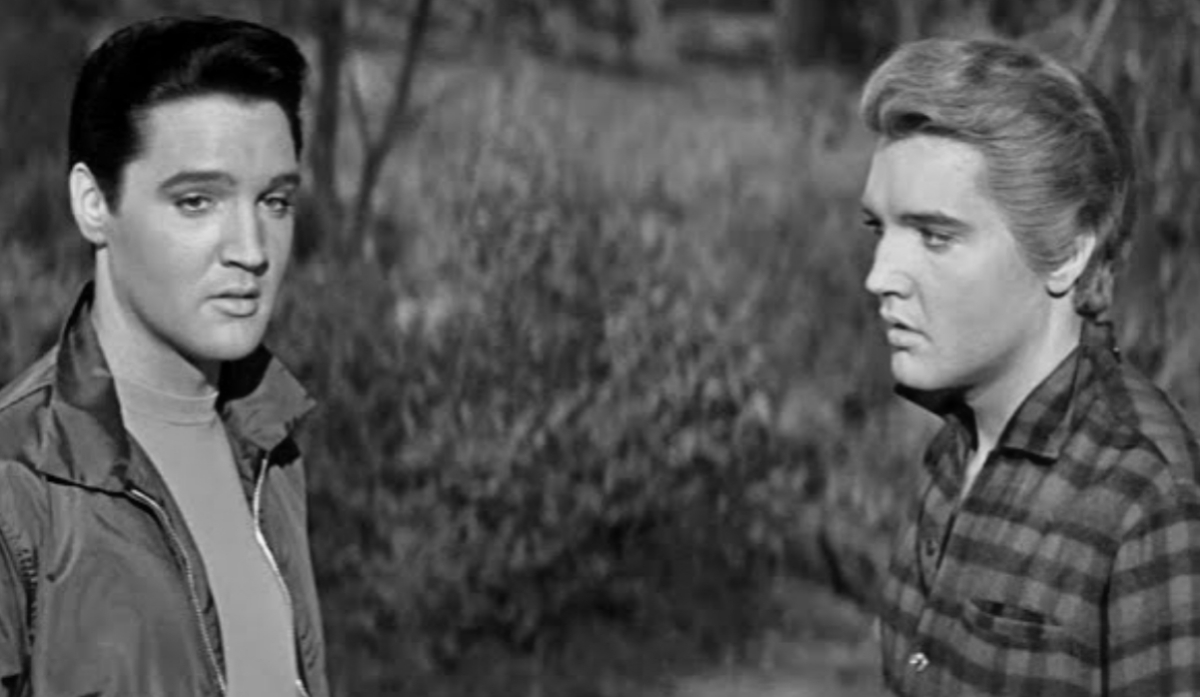
Kissin’ Cousins (1964): Military officer and hillbilly cousin, plot about military intervention civilizing rural America.
The plot forces the integration of isolated rural Americans into the national defense infrastructure, asserting that the military’s goals are non-negotiable and that local resistance to state power is simply quaint and easily overcome.
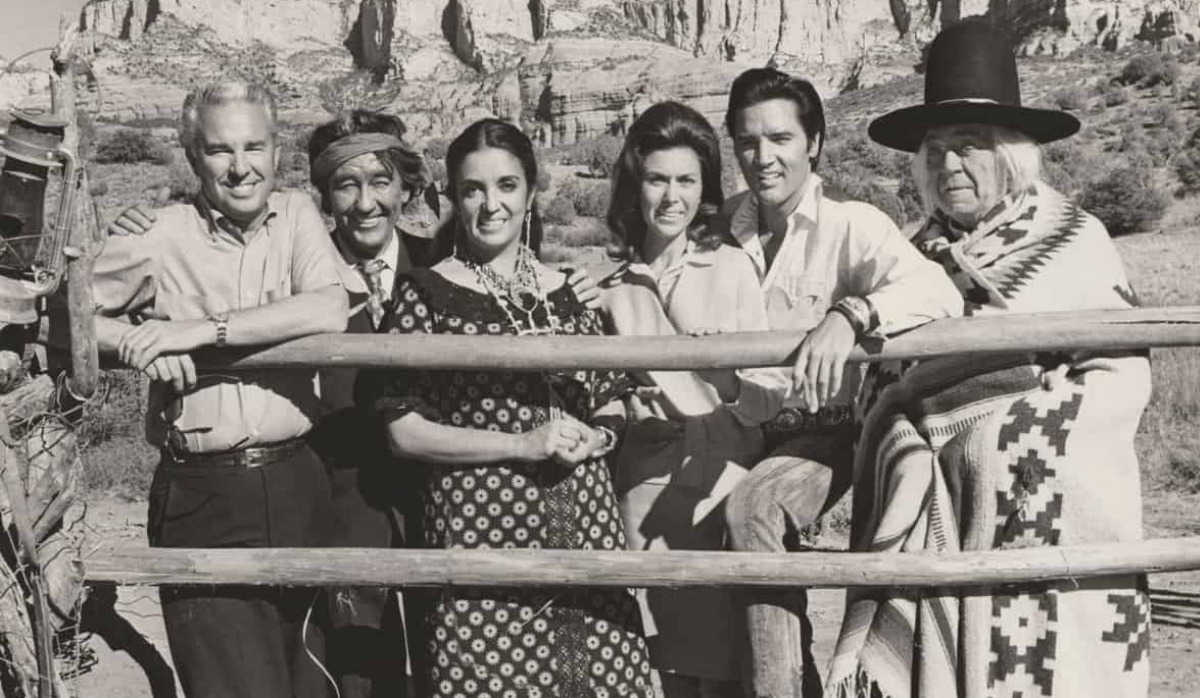
Stay Away, Joe (1968): Elvis plays a Native American in a comedy reducing indigenous culture to white entertainment.
This trivialized social justice concerns and racial conflict. By having Elvis play a caricature of a Native American, the film reduced complex issues of indigenous poverty and sovereignty to a harmless, laughable comedy, sanitizing the image of American power while reducing marginalized groups to mere entertainment.
The pattern is unmistakable.
American military good. American values necessary. The exotic must be tamed, integrated, made safe for consumption.
Those who resist integration are laughable.
The kid who made parents panic with gyrating hips spent his career teaching their children that the state knows best.
That American power is benevolent.
That rebellion is a phase you grow out of.
Bernays would have wept with pride. The Cold War cultural engineers got exactly what they needed.
Teenagers thought they were rebelling.
They were trained to consume and comply. And I imagine, it worked better than they ever dreamed possible.
The Payoff: Cultural Implantation That Never Dies
Elvis Presley died in 1977. Forty-eight years later, his estate still earns $25-30 million annually in merchandise alone, plus millions more in streaming royalties.
Parker bought him for $40,000 and created a cultural imprint so deep that half a century after death, people still feed the machine. That’s not entertainment success. That’s psychological conditioning at a scale that proves the operation worked, and is still working.
The teenager as consumer.
Rebellion as product.
Compliance as maturity.
All still operational.
The Final Twist
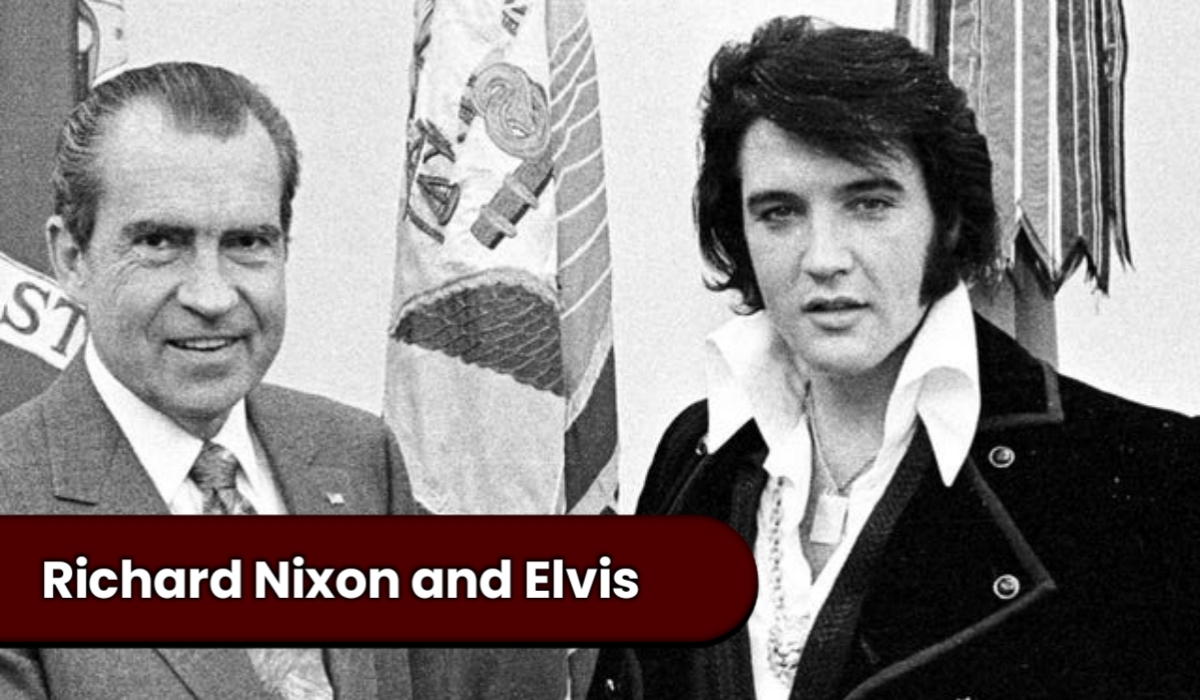
I was about to post this when I thought about his visit to the White House to meet Nixon. The famous 1970 White House meeting, where Elvis personally met with President Richard Nixon to volunteer his services as an “Agent at Large” in the war against drugs and communism.
For years, critics and biographers dismissed this bizarre episode as the ultimate punchline to Elvis’s decline.
A washed-up star, desperate for relevance, pretending to be the government agent he was parodying. The public laughed at the absurdity of the “King” asking for an honorary badge.
What they missed, what they were never meant to understand, was the profound irony:
Elvis wasn’t pretending;
He was simply reporting for duty.
Still To Come:
Volume 3 – Building the Infrastructure: The Birth of The Comedy Store
Elvis had the stage. Hollywood had the screens. Now the propagandists needed a more personal delivery system, that system would be known as stand-up comedy. We’ll trace how a failed comedian, a mob-connected nightclub, and a convenient “firing” from Parker’s camp created the blueprint for controlling American comedy for half a century.
Volume 4 – The Comedy Store Regulars: Manufactured Mavericks
From Robin Williams to Sam Kinison, and later Bobby Lee and Theo Von, every “outsider” comic came through the same gate, got the same blessing, and carried the same message. In this chapter, we’ll peel back the mythology and show how the most “authentic” voices in comedy were trained to deliver scripted authenticity.
Volume 5 – Joe Rogan: The Modern-Day Gatekeeper
When Mitzi Shore died, the torch wasn’t extinguished—it was passed. Rogan didn’t build The Comedy Mothership to save comedy. He built it to continue the legacy. We’ll break down his true role, his network of handlers, and why the world’s biggest “free thinker” keeps interviewing billionaires instead of questioning them.
Volume 6 – The Future of Propaganda: The Digital Comics
The next generation of propagandists won’t need a stage—they’ll stream straight into your home. From Bad Friends to algorithm-curated clips, the system has evolved, but the message hasn’t. This volume explores how podcast empires, AI content farms, and influencer comedy are tightening the noose around cultural thought itself.
Volume 7 and Beyond – Deep Dives into Shady Origin Stories
Every time I look into a comedian, their origin story turns out to be fiction. I’ll continue my deep dives into the Comedy Store regulars and the new crop coming out of Austin. We’ll uncover who funded their rise, who promotes them, and who protects them. Future installments will unravel the tangled web of money, intelligence ties, and media alliances that keep America laughing and asleep.
This isn’t a theory. It’s a historical autopsy.
If you’re ready to see how the machinery really works, to understand the “why” behind the “what,” subscribe below. You will receive each new volume of this investigation directly in your inbox as it’s published.
Subscribe for free to get the full story. The only cost is your time.
For those who wish to support this intensive, independent research, paid subscriptions are available. They show me that dedicating the numerous hours required to connect the dots and present them clearly aren’t being wasted.
Remember, your skepticism is your greatest asset.
Use it.
SOURCES
Edward Bernays (APA): https://www.apa.org/monitor/2009/12/consumer
Edward Bernays (Smithsonian): https://smithsonianeducation.org/idealabs/ap/essays/consume2.htm
Edward Bernays (BBC): https://www.bbc.com/news/magazine-29652743
Col. Tom Parker (National Archives): https://catalog.archives.gov/id/74888647
Col. Tom Parker (NPR Transcript): https://podcasts.musixmatch.com/podcast/fresh-air-01gv2bv14079rhv1ch6dvacm7m/episode/correcting-the-record-on-elviss-manager-01k1h14a5g89ws917g60fqs750
CIA & Cultural Cold War (JSTOR Daily): https://daily.jstor.org/was-modern-art-really-a-cia-psy-op/
CIA & Cultural Cold War (Guggenheim): https://www.guggenheim-bilbao.eus/en/did-you-know/la-cia-y-el-expresionismo-abstracto
RCA/David Sarnoff/Navy (IEEE): https://ieee.li/pulse/pulse_2021_09.pdf
Elvis’s Military Service (National Archives): https://www.archives.gov/publications/prologue/2006/spring/vips-military.html
How Elvis Became A Symbol Of U.S. Military Might https://stories.tamu.edu/news/2016/10/05/68709/?hl=en-US
Kissin’ Cousins (1964) – Elvis’ 14th Movie – DEENA’S DAYS https://deenasdays.com/2021/05/02/kissin-cousins-1964-elvis-14th-movie/?hl=en-US
Stay Away, Joe … A Review of Elvis Presley’s Twenty-sixth Movie – Elvis History Blog http://www.elvis-history-blog.com/stay-away.html?hl=en-US
The Society Pages – Torches Of Freedom – https://thesocietypages.org/socimages/2012/02/27/torches-of-freedom-women-and-smoking-propaganda/
“He Told Me I’d Have To Go To Jail…” — The Jacksonville Incident http://www.floridahistorynetwork.com/may-13-1955—jax-fans-chase-elvis-after-show-tear-off-his-clothes.html