From Elvis Presley to Joe Rogan: How Elvis’s Handler, Colonel Tom Parker, Engineered the System That Shaped 50 Years of American Comedy, And Built Today’s Most Powerful Media Empire
Authors Note: This series will change everything you thought you knew about American comedy.
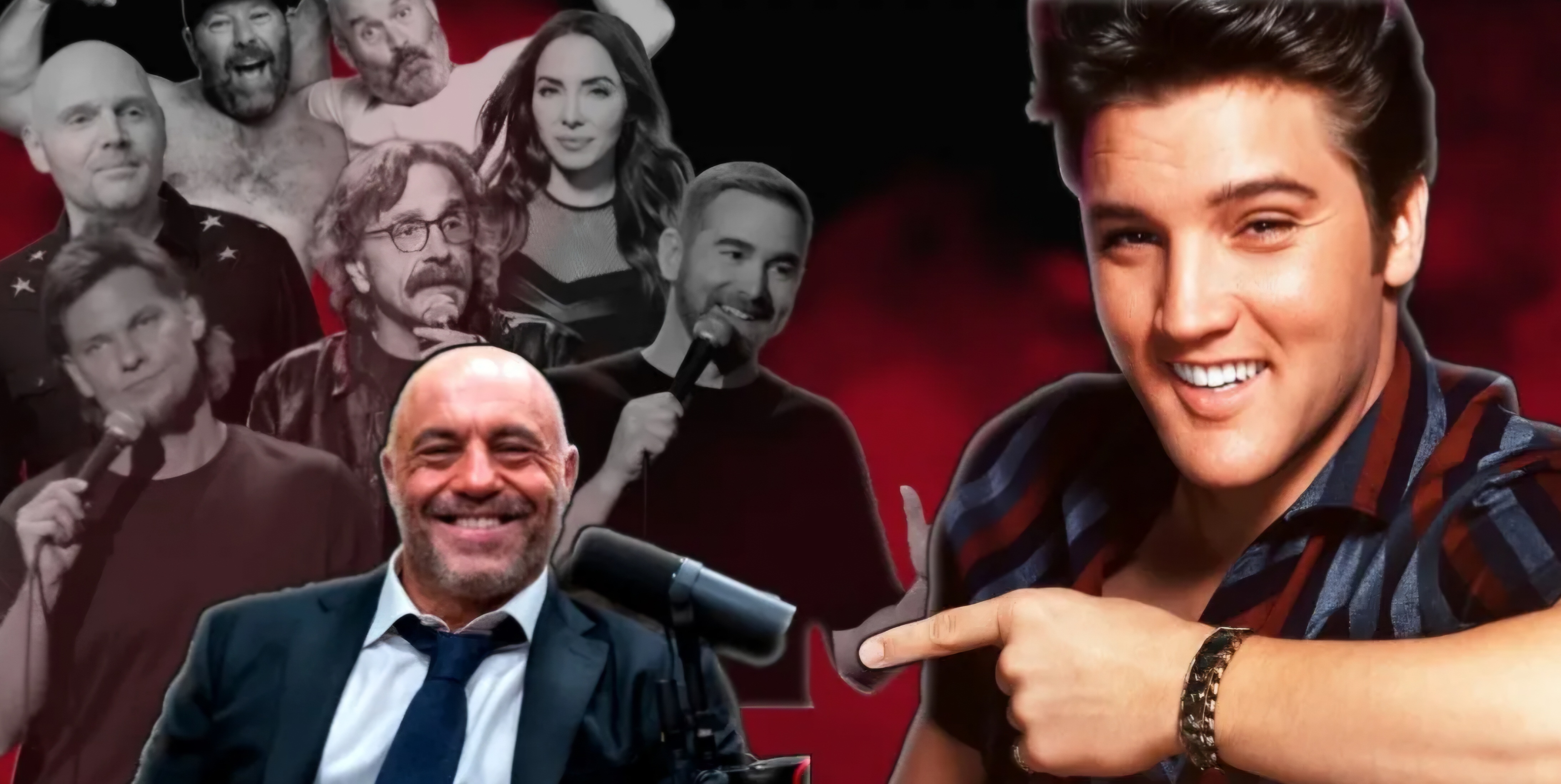
If you look through the billowing cigar smoke, tune out the forced laughter, refuse the elk meat sandwiches, decline the designer water, resist the branded nicotine pouches, and pull back the smoke-stained curtain, you will find a small group of handpicked, highly trained operatives with meticulously fabricated origin stories performing kayfabe podcast theater for an audience who mistakes their own mental conditioning for comedy.
I understand why this is a more disturbing reality than most are comfortable confronting. Consider what this means: that the people presenting themselves as the goofball jesters of society, who have built parasocial relationships with millions of people, giving them the ability to mobilize thousands whenever the need arises, are actually government-sanctioned wardens, tasked with corralling their demographic and mentally conditioning them to remain inside of a mental prison built with specific ideological boundaries.
Sound nuts? Good, it should. But I intend to prove it’s true.
A few perceptive critics have grazed the edges of this truth, noting a disturbing pattern here, a strange coincidence there. However, no one has put it all together, which is necessary, to expose the full scale.
Like prisoners in Plato’s Cave, they only see shadows of the symptoms. To diagnose the disease, we must step outside the cave. It’s the only way to see the truth.
As cringe as all of that sounds, that’s my only pursuit… the truth.
It’s the reason I’ve spent countless hours digging, cross-checking records, and connecting dots that weren’t meant to be connected. My goal is simple, but massive in scope: to expose the walls of a one-hundred-year-old mental prison that still remains invisible to those trapped inside it.
A full unmasking is needed of the prison, the wardens, the guards, and the faceless owners stalking the shadows. A piece that can’t be brushed off or fact-checked away. One that’ll be here for anyone ready to break the illusion, and for the truly courageous, who share it with those defending their jailers.
Until now I’ve never felt confident in my ability to do it justice. The reason I now believe I can pull it off is…
Podcasters.
I’ve been a fan of the comedians we now know as podcasters for decades.
As a long-time fan of stand-up comedy, I was aware of most of today’s podcasters long before the podcast craze was a twinkle in a rookie Intel agent’s eye. It wasn’t until launching this Substack a couple of months ago and digging into the bizarre lives of Theo Von, Andrew Schulz, and Tim Dillon. That patterns emerged and pieces snapped into place, bringing the shadowy reality beneath the surface into focus. But to understand, you must first understand…
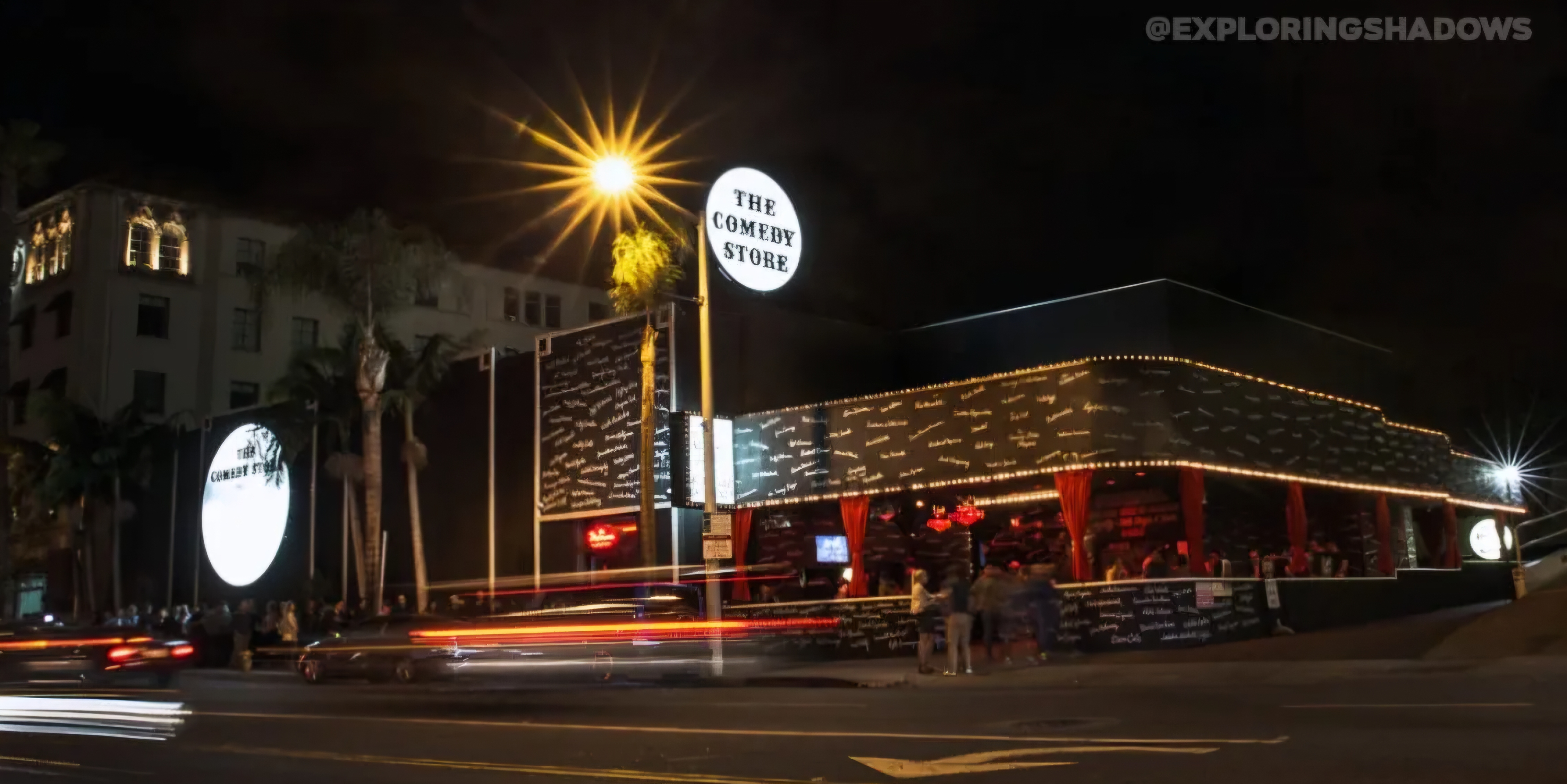
The Comedy Store
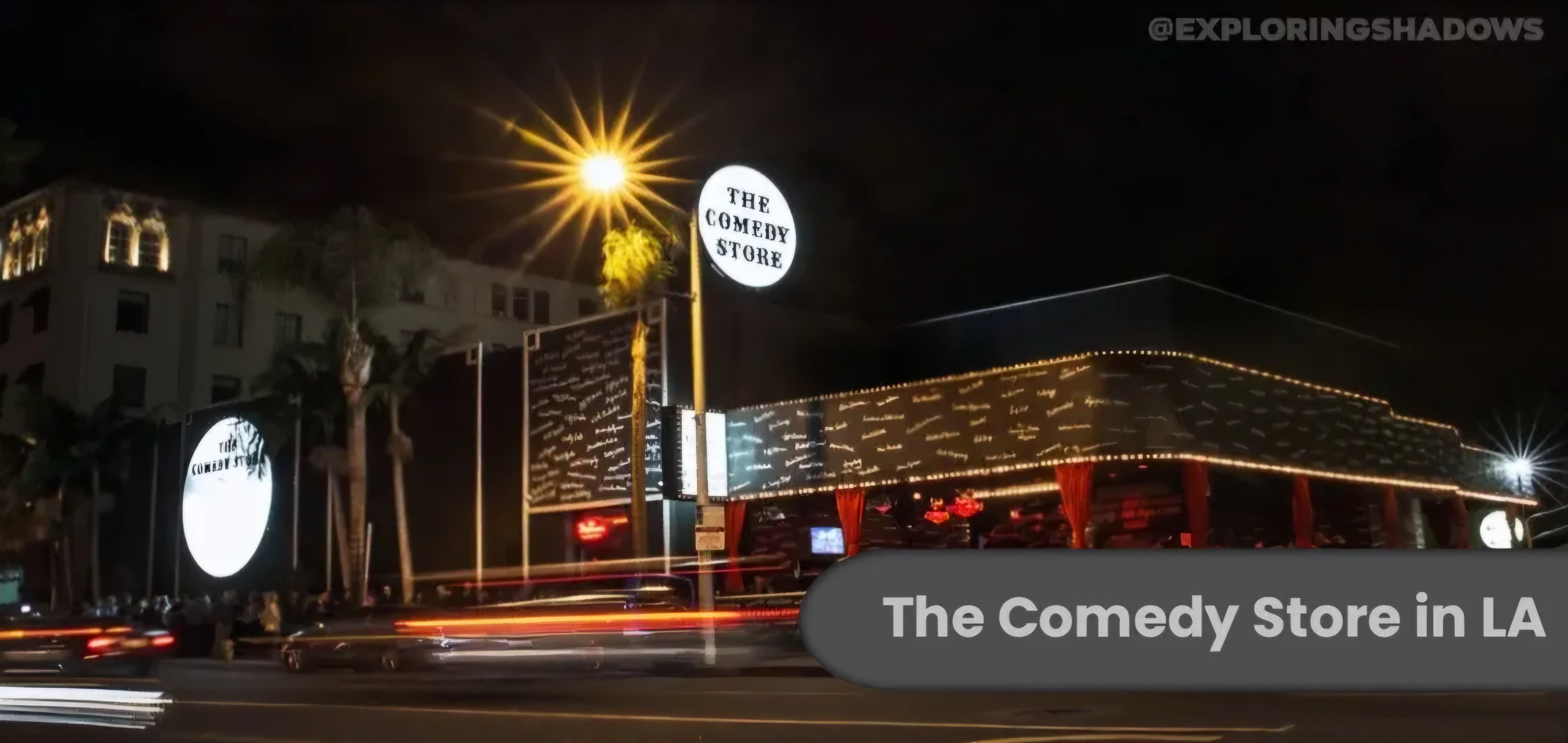
From the outside, The Comedy Store in L.A. looks like a comedy club. But once you scratch beneath the surface, you soon realize it’s more accurately described as a farm system and strategic boot camp for training America’s ideological conditioning corps, and Mitzi Shore was its unquestioned leader.
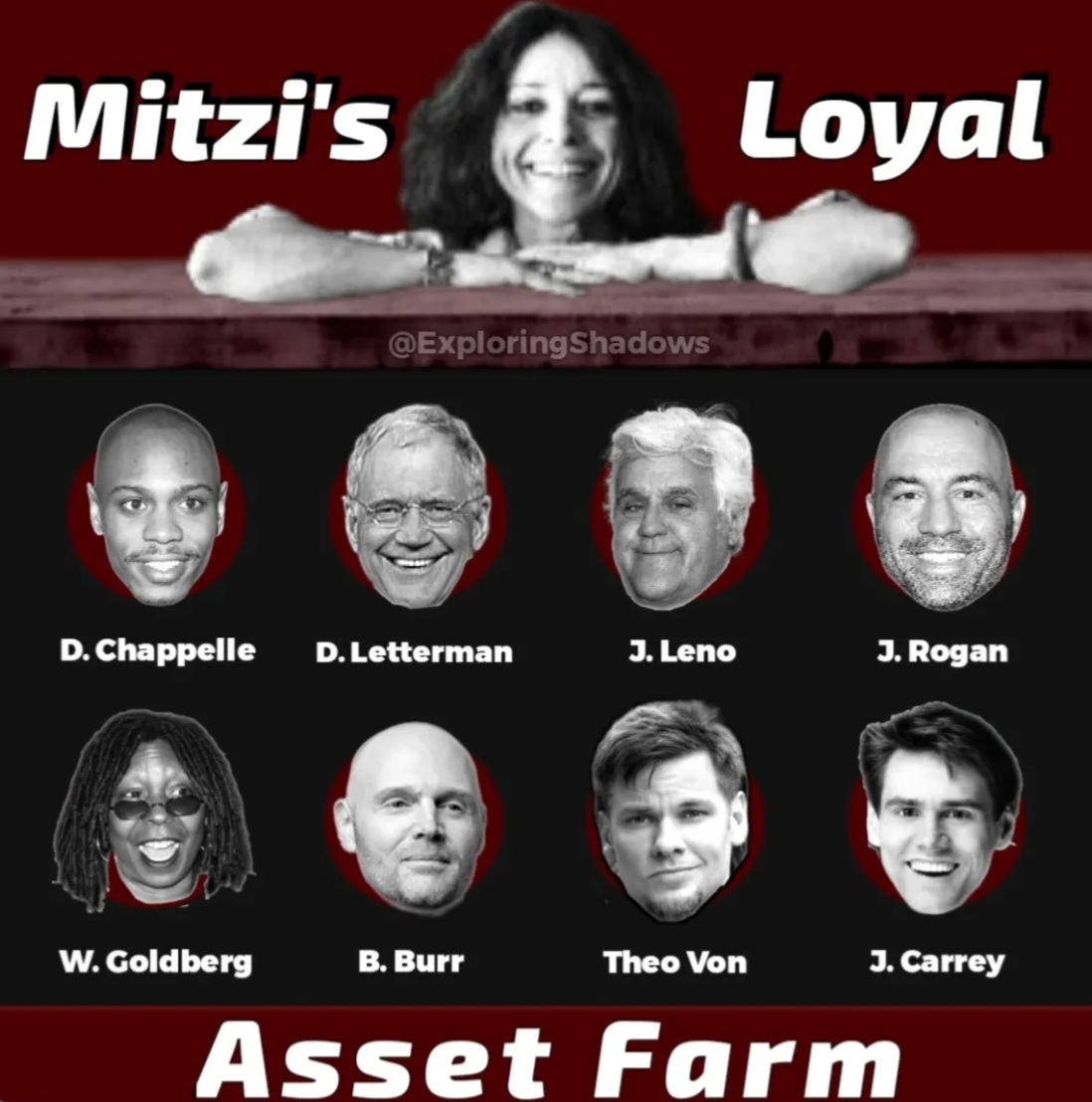
The image below reveals the power and fame awaiting those Mitzi “approved of.” These aren’t just comedians; still today, the people she selected are cultural icons. Some of the most recognizable people in the world came through The Comedy Store’s farm system. One woman, in one club, maintained an unimaginable level of power for over forty years.
The Wardens
The Wardens (which I will be calling them from this point forward) care nothing for left versus right, Republican versus Democrat, other than how they can use that conflict as fuel. Those labels are for you, the prisoner. The Wardens’ purpose is not to argue for a specific political party; it is to enforce the boundaries of the arena in which the argument takes place.
They let you know what can and cannot be said. How far you can go and which words are acceptable to say. A certain set of comedians are seemingly ecstatic they can say retard again. So, they gave you back a word they couldn’t take and all it cost was your curiosity? Great.
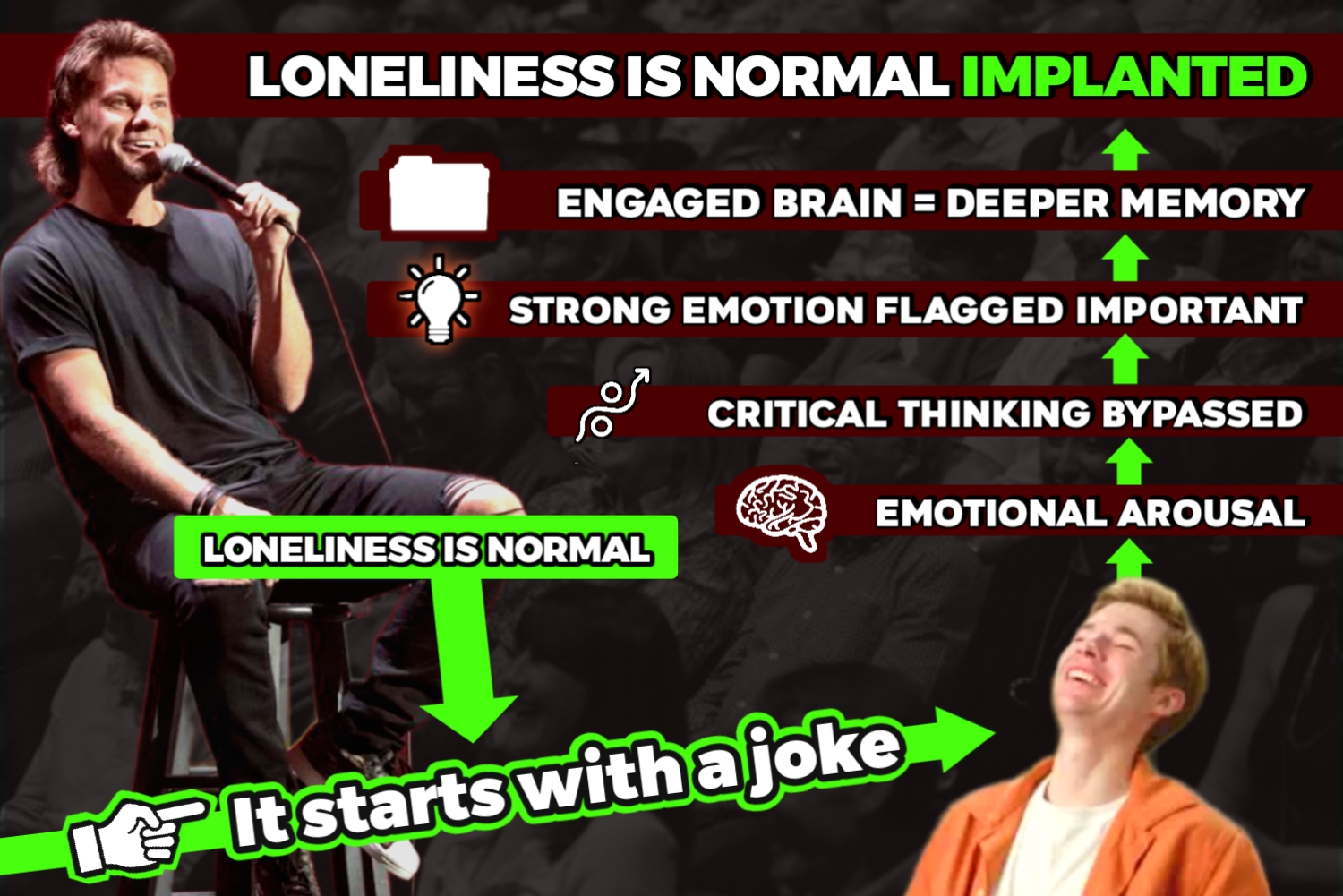
Propagandists have always used proven psychological manipulation techniques to influence their audience. This is nothing new. Modern-day comedic wardens use these as well, but also have a distinct advantage over the rest. Employing the often-used defense of “it’s just jokes,” they are able to build walls around consensus reality without scrutiny, keeping the public’s imagination inside of permitted grounds.
If this is beginning to sound a little too “out there,” don’t worry, it’ll all be explained in time.
Consider this:

Nearly every nation on earth has a ministry of culture. Most, like France, Italy, and Germany, have an official government department by that name, with a stated goal of enrichment of its citizens’ lives.
The United States insists it has no such department. Odd, considering it operates the most sophisticated Ministry of Culture the Earth has ever known. One that’s been “enriching” American lives for over a century.
It might be covert, but not secret; we have all been conditioned to call it…
The Entertainment Industry.
The Deepest Of Deep Dives
First we wil prove these operations were and are very real with a quick look into a few documented through history. This truth will become uncomfortable for some once we begin narrowing our focus down to the perfect case study: American comedy.
Unlike the various power structures of Hollywood or the music industry, comedy had a notoriously narrow gate. For decades, nearly every major comedian in America had to pass through one door, earn the respect of one club, and receive the approval of one woman to even sniff a national audience.
This single point of control makes comedy the ideal lens through which to expose the entire entertainment industry’s apparatus, the propagandists, their handlers, their orders, and possibly their masters.
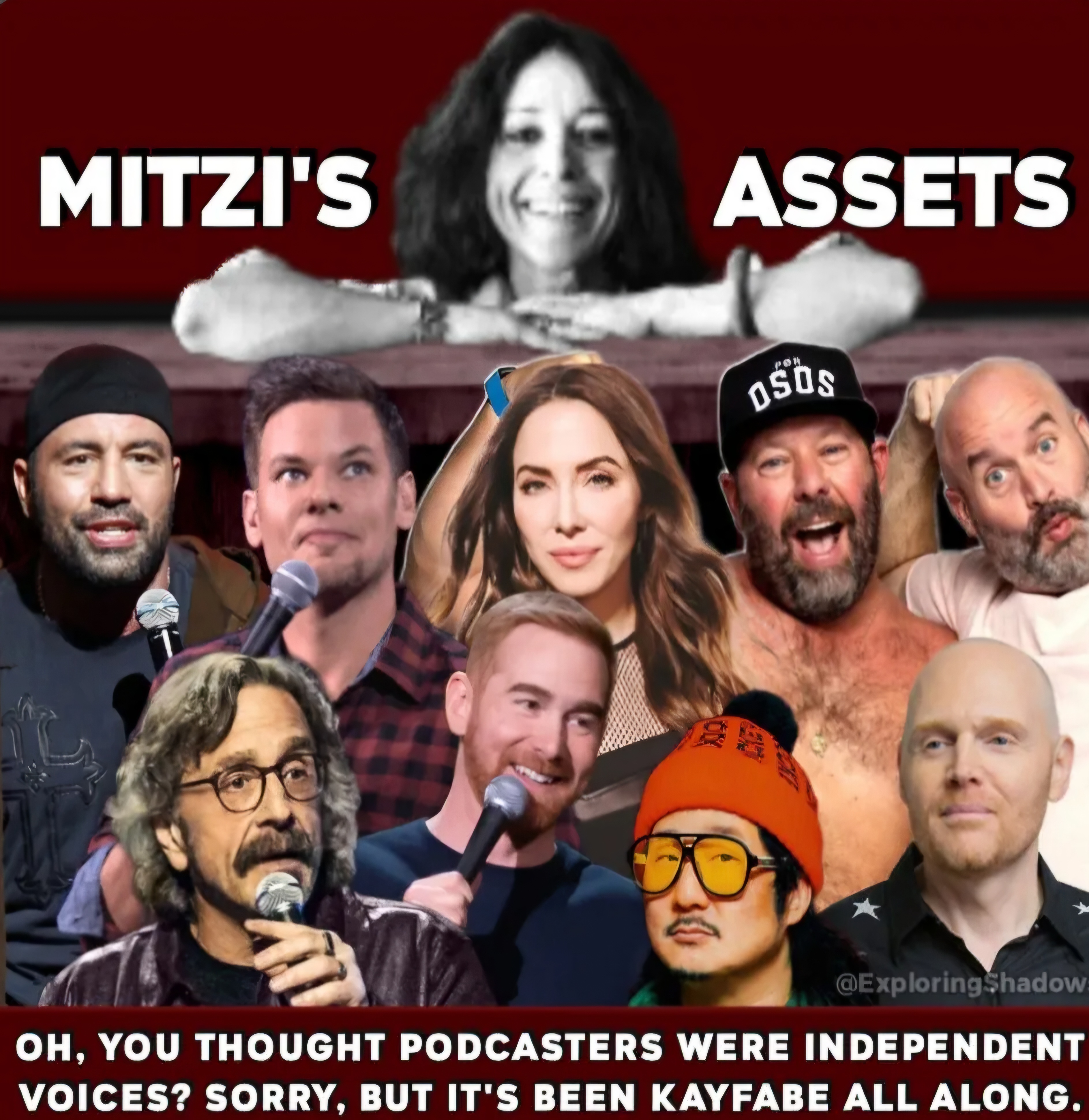
As a quick teaser, look at the faces in the image above and ask yourself, “Why are the ‘comedians’ Mitzi Shore selected as ‘Paid Regulars’ at The Comedy Store before her death in 2018, the same comedians whose podcasts became the engine of the podcast boom in America?
Coincidence? Doubtful. Blueprint!
We’ll also trace the network behind today’s podcasters, showing a line directly from Elvis Presley to The Comedy Store in L.A., until Mitzi Shore’s death. When the operation moved to The Comedy Mothership in Austin. Joe Rogan took over the responsibility once held by Mitzi Shore and The Tonight Show. To introduce and promote the new generation of government approved propagandists to the public.
By the end of this series, you will understand that the people you know as comedians are more than jesters; they’re government propagandists, trained to steer public sentiment in desired directions.
Propaganda From The Beginning
Before we get into the charlatans masquerading as comedians, I need to show how we get to today.
Since the earliest days of Hollywood, stars have been created with one goal in mind: to push the government’s agenda.
As far back as 1918, Charlie Chaplin, Douglas Fairbanks, and Mary Pickford would make appearances, often together, in major cities. [1]
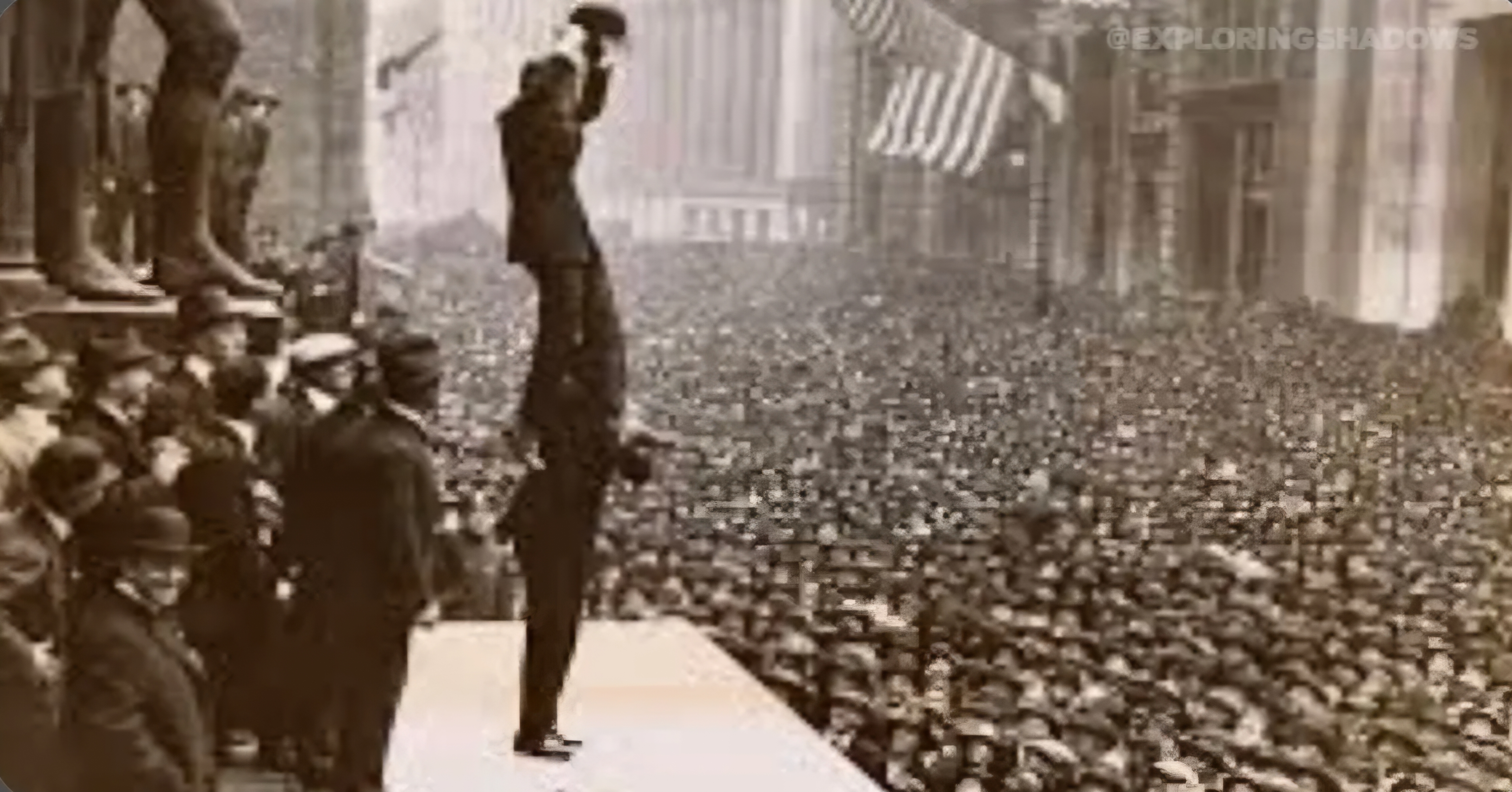
They wouldn’t just give speeches. They performed a carefully crafted “act” where they used the celebrity built in the entertainment industry to literally sell war bonds to massive, adoring crowds.
During which Chaplin would pressure the crowd with:
“I don’t have to tell you what to do for your country. All I have to say is… do it now! Two hours from now it may be too late.” – Charlie Chaplin
Then Came Shirley Temple
During the Great Depression, Hollywood wasn’t just making movies, it was managing national morale. The government worked hand-in-hand with the studios to steer public sentiment away from anger at the banking class and toward faith in the system.
While millions were out of work and furious, Shirley Temple was on screen teaching everyone to smile, behave, and believe that good things happen if you stay sweet and compliant. [2]
The wealthiest robbed the nation blind during the Great Depression, and Temple’s films offered a weekly dose of plucky good cheer and individual triumph. The last thing those in power want is for people to start asking why they are suffering. So, her core message was to stay positively passive, and everything will work out.
As historian John F. Kasson observed…
Shirley Temple wasn’t just an entertainer, she was a prototype of mass emotional engineering. Her carefully packaged optimism didn’t just lift spirits, it reshaped the American psyche and taught a generation to smile through its own subjugation. [4]
In other words: she was the soft face of social control, the human delivery system for elite messaging wrapped in curls and dimples.
Judy Garland
After Shirley Temple taught families to smile while starving through the Great Depression, Hollywood needed someone to help feel hope in a brighter future. For this task, they selected Judy Garland. [3]
In films like The Wizard of Oz and Meet Me in St. Louis, audiences weren’t just watching stories; they were being trained how to feel. Fear was softened into hope, sadness tempered with resilience, and moral virtue rewarded with emotional satisfaction.
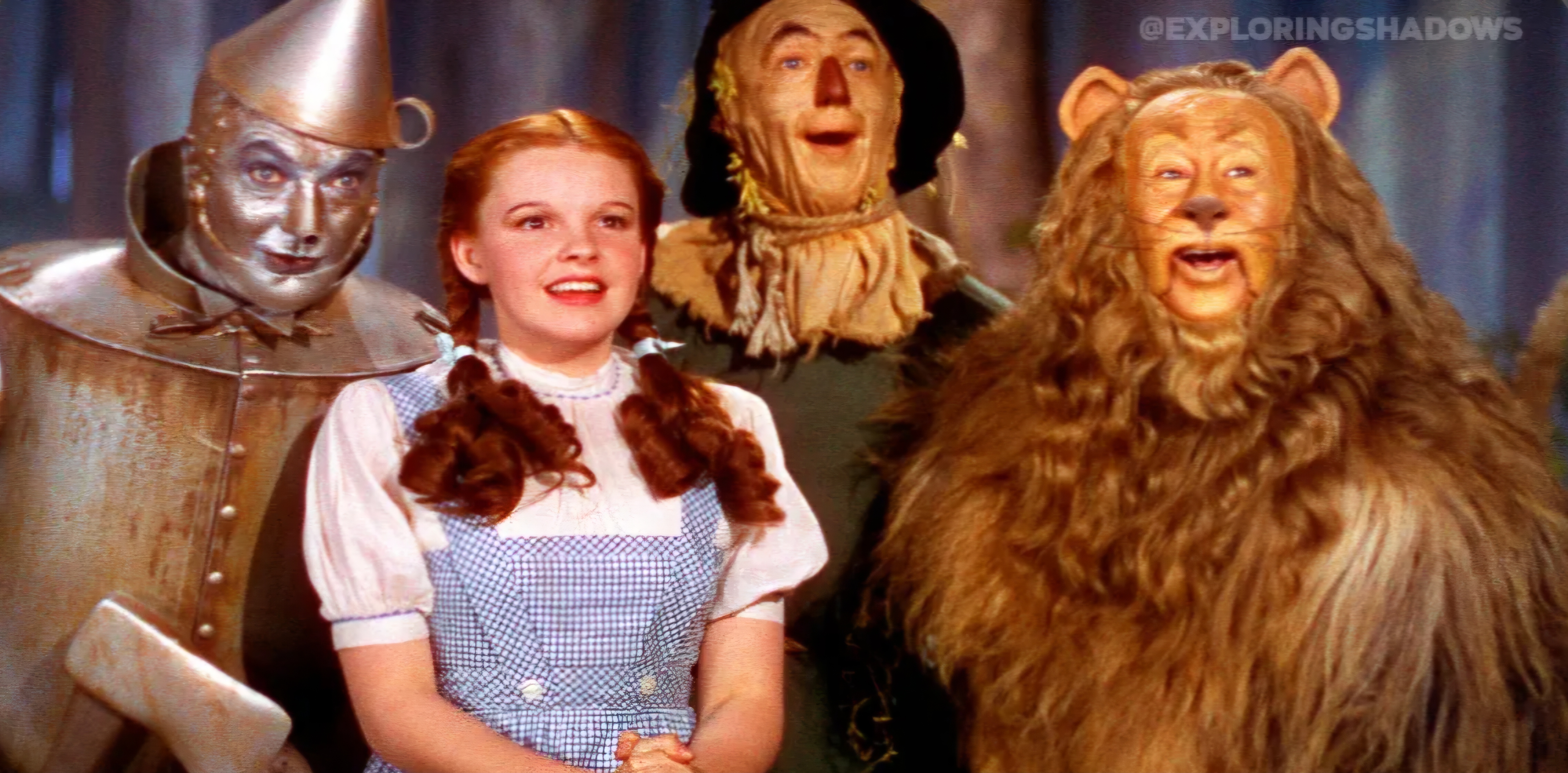
Garland’s songs, tears, and smiles acted as social cues: here is how to empathize, here is how to persevere, here is how to accept hardship without questioning the system.
Emotional literacy designed by Hollywood, preparing a generation to follow the new rules of optimism, obedience, and socially approved behavior.
Elvis Presley Arrives On The Scene
Decades later, Elvis Presley would perfect the celebrity formula: he would sell rebellion while teaching compliance. And it was devastatingly effective against a population of kids who were defenseless against a set of swinging hips. Colonel Tom Parker, Elvis’s handler, took the celebrity model to the next level before handing his system off to the next generation.
What happened next would ensure that Parker’s formula didn’t die with rock and roll. It evolved, reappearing in a new form, inside a smoke-filled club on the Sunset Strip.
One of Elvis’s opening acts, a struggling comedian named Sammy Shore, would be the bridge. After he mysteriously became the owner of a club that became the single most important gatekeeper in the history of American comedy.
April 1972: The Door Opens
Sammy Shulman was born to Jewish immigrants from the Ukraine region of Eastern Europe on January 7th, 1927. By April of 1972, he’d changed his name to Sammy Shore, he was forty-five, broke, and to make it worse, he was a washed up comedian. [5]
Yet, instead of spending his last dollars in a dive bar, drinking his blues away, he was unlocking the door to his newly acquired nightclub, a club that “coincidentally” happened to be mob-owned and one of the most prestigious venues on the Sunset Strip:
Ciro’s Supper Club.
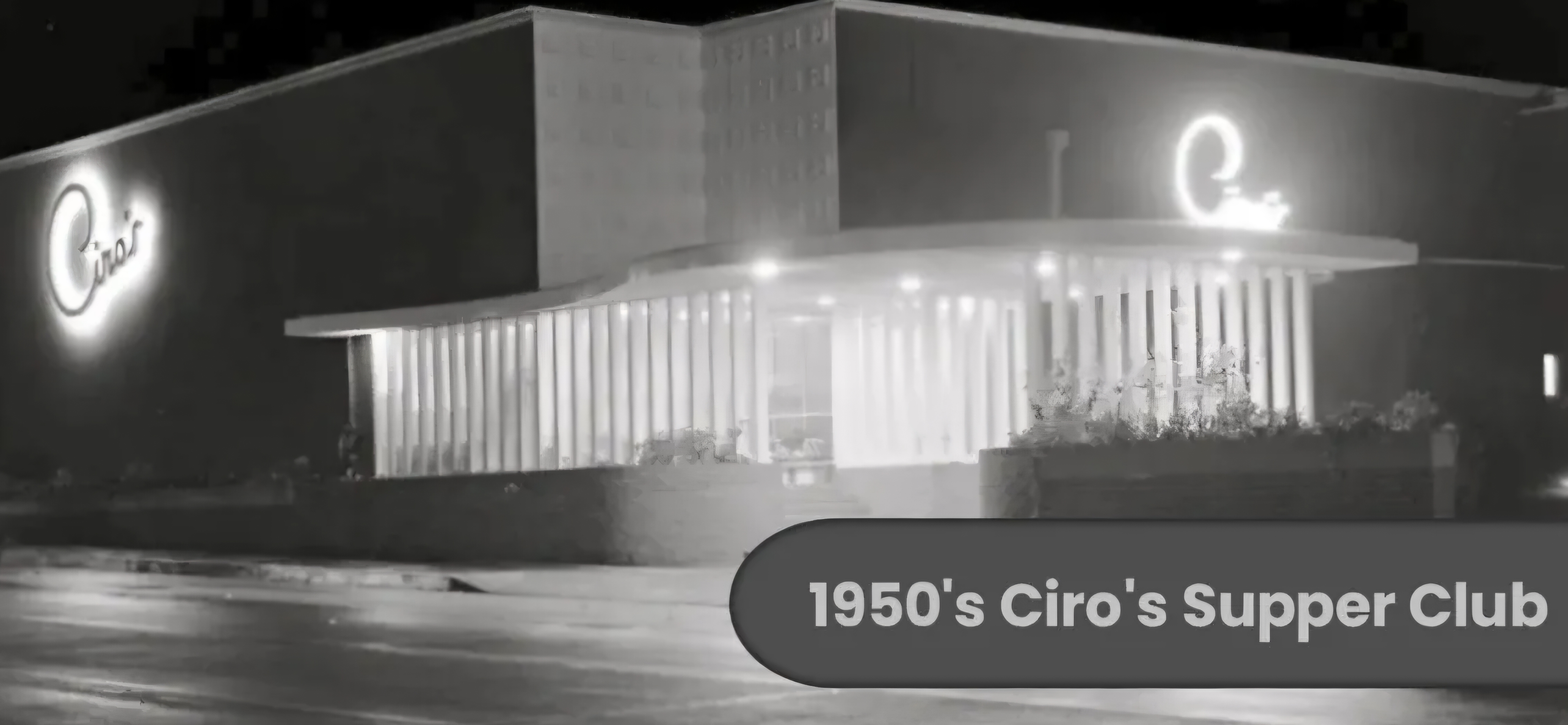
Established as a glamorous, celebrity-only hotspot in the 1950s, Ciro’s hosted everyone from Frank Sinatra to Marilyn Monroe, who famously selected Ciro’s to debut her singing act. This wasn’t a dive bar. This was pre-existing infrastructure being transitioned to a new use, and Sammy Shore, the man everyone in LA knew couldn’t rub two nickels together, had the keys.
The whispers started immediately.
“Where’d the money come from?”
“Ciro’s was a mob front, Sammy’s just the new face.”
“It’s Colonel Tom Parker’s club. CIA got to him.”
Sammy didn’t care if people thought he was tied to the mob, the intelligence community, or both. What mattered was simple: he’d moved from performer to operator.
As the rumors spread, Sammy, his family, and a small circle of insiders quietly began shaping what people all over the world thought, laughed at, and believed. We are still feeling the effects of decisions made by this family back in 1972.
That’s the story as it happened.
The story Sammy wanted you to believe was cleaner.
It went something like this: Elvis Presley’s handler, Colonel Tom Parker, had fired Shore a month earlier for performing unauthorized gigs in mob-owned lounges while serving as Presley’s opening act. (Which shows two things: Shore was running in circles that landed him an opening gig for Elvis, no small achievement. It also connects Shore to organized crime.
Then, within weeks of being fired, Sammy somehow secured undisclosed funding to buy one of the hottest properties on the Sunset Strip. There’s nothing discreet about this.
This is a textbook intelligence operation.
First, the asset is publicly “fired” or disgraced. That creates distance from the handler and provides a cover story.
Next, there’s immediate access to unexplained funding. Large sums appear with no transparent source.
Then comes strategic infrastructure acquisition. The asset gains control of a cultural choke point like a nightclub or media outlet.
Rapid legitimation follows as supporting infrastructure conveniently relocates to validate the new operation. (Which is coming next)
And finally, public narrative management sets in with a simple, believable story that discourages investigation.
They are still using this page of the playbook today. We will look in detail at multiple operations set up this way.
The timeline and fifty years of history strongly suggest that Tom Parker, with help from powerful friends (possibly intelligence-related, as we’ll learn in the Elvis and Tom Parker volume), positioned Shore as a comedy club owner to spot potential propaganda assets and turn raw performers into carefully crafted personalities who would sell American propaganda night after night across the country.
By 1972, Elvis Presley had spent twenty years delivering pro-American messaging under Parker’s direction. By then, the line between organized crime and intelligence operations had blurred to invisibility. The CIA’s collaboration with the mob is well documented, from Castro assassination plots to heroin trafficking in Southeast Asia. Intelligence agencies were a part of the entertainment industry before the CIA was even created.
According to declassified CIA documents, agents were,
Recruiting assets within the highest levels of the film industry and using them to spy on Hollywood, alter movie content, remove undesirable actors, and shape public perception. [8]
By 1972, the intelligence community’s ties to the entertainment industry were an open secret to everyone except the gullible American public who were still happily buying tickets.
For context, in 1972 most Americans still believed professional wrestling was real, and that the wild characters in the ring were the wrestlers’ actual personalities.
So, when Sammy Shore, freshly fired and flat broke, suddenly appeared with the keys to Ciro’s, Los Angeles was rightfully suspicious. Mob front? Intelligence operation? Both?
The whispers continue.
The Infrastructure Arrives
Receiving the club was a stroke of good luck, but it was the announcement one month later that cemented his family’s legacy as cultural gatekeepers for generations.
It was as if the Lord himself touched Sammy on the shoulder and said, “Have this gift,” because without prior notice, The Tonight Show moved from New York to Los Angeles and parked itself down the road from Sammy’s new club that he’d just renamed The Comedy Store…
And history was cemented.
That’s not a coincidence; that’s building infrastructure.
With those two moves completed, the stage was set for a system that would shape not only American comedy but American thought itself for generations to come.
The Snowman
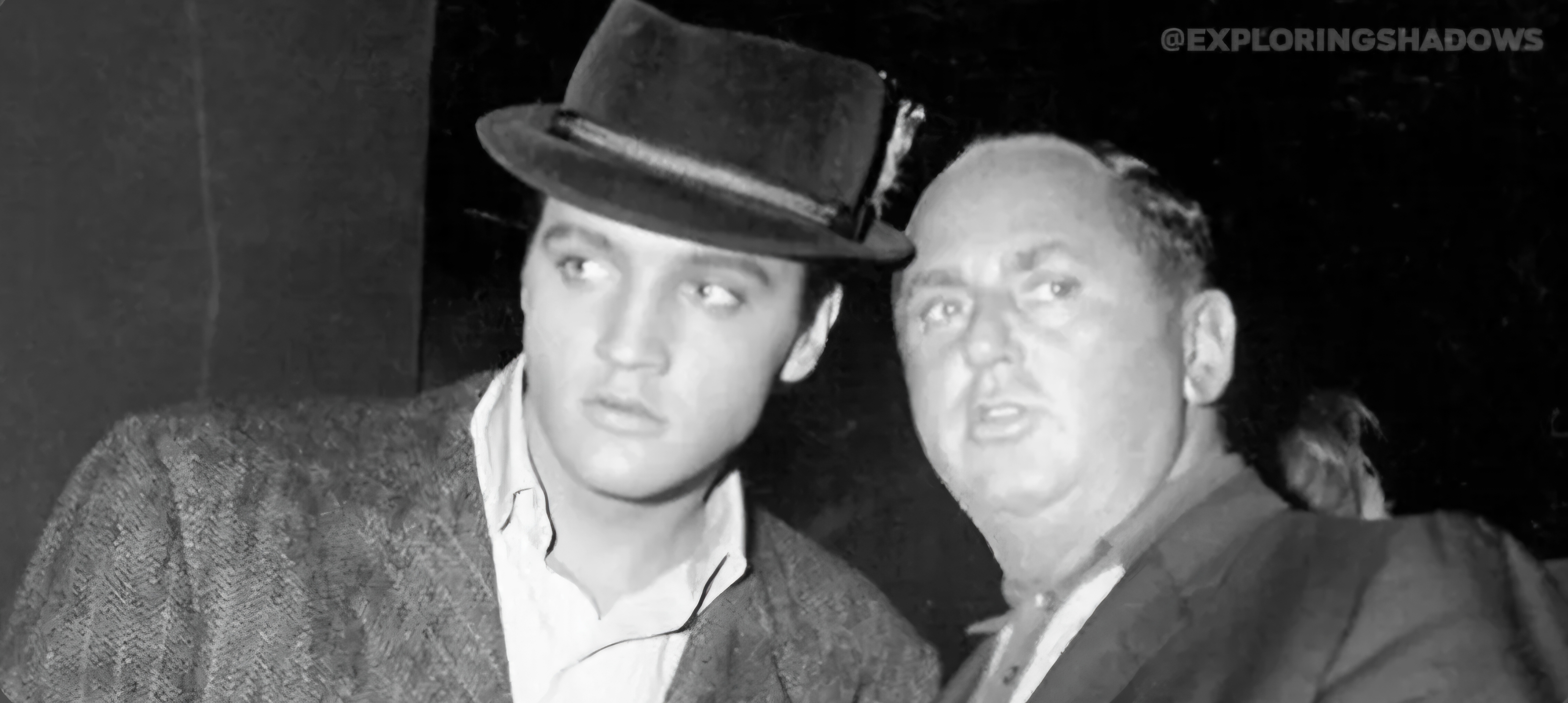
To truly understand the power of celebrity-led propaganda, and how it’s still being used to shape culture today, we need to go back to 1954, when a young truck driver from Tupelo walked into Sun Records and flipped the world on its head.
But it wasn’t his raw talent that mesmerized audiences; the real revolution was “The Snowman,” a mysterious figure who took ownership of Elvis and used him to manipulate human psychology in order to reshape how young people saw themselves, the world, and their place within it.
That’s where this story really begins.
Because before The Comedy Store or The Tonight Show, before Mitzi Shore or Joe Rogan, there was Elvis Presley. But you can’t understand Elvis, or the impact he had on America, without understanding the illegal immigrant, carnival operator who owned him, Colonel Tom Parker.
Coming Up:
Each volume will peel back another layer of the illusion. A guided tour through the machinery that turns laughter into leverage, and leverage into obedience.
Volume 2 — Elvis & The Colonel: The Deal That Changed Everything
Before there was a Mitzi Shore or a Joe Rogan, there was Colonel Tom Parker, the carnival handler who turned Elvis Presley into America’s first controlled rebellion. This volume exposes how the “King of Rock ’n’ Roll” became the prototype for a new kind of propaganda: rebellion for sale.
Volume 3 – Building the Infrastructure: The Birth of The Comedy Store
Elvis had the stage. Hollywood had the screens. Now the propagandists needed a more personal delivery system, that system would be known as stand-up comedy. We’ll trace how a failed comedian, a mob-connected nightclub, and a convenient “firing” from Parker’s camp created the blueprint for controlling American comedy for half a century.
Volume 4 – The Comedy Store Regulars: Manufactured Mavericks
From Robin Williams to Sam Kinison, and later Bobby Lee and Theo Von, every “outsider” comic came through the same gate, got the same blessing, and carried the same message. In this chapter, we’ll peel back the mythology and show how the most “authentic” voices in comedy were trained to deliver scripted authenticity.
Volume 5 – Joe Rogan: The Modern-Day Gatekeeper
When Mitzi Shore died, the torch wasn’t extinguished—it was passed. Rogan didn’t build The Comedy Mothership to save comedy. He built it to continue the legacy. We’ll break down his true role, his network of handlers, and why the world’s biggest “free thinker” keeps interviewing billionaires instead of questioning them.
Volume 6 – The Future of Propaganda: The Digital Comics
The next generation of propagandists won’t need a stage—they’ll stream straight into your home. From Bad Friends to algorithm-curated clips, the system has evolved, but the message hasn’t. This volume explores how podcast empires, AI content farms, and influencer comedy are tightening the noose around cultural thought itself.
Volume 7 and Beyond – Deep Dives into Shady Origin Stories
Every time I look into a comedian, their origin story turns out to be fiction. I’ll continue my deep dives into the Comedy Store regulars and the new crop coming out of Austin. We’ll uncover who funded their rise, who promotes them, and who protects them. Future installments will unravel the tangled web of money, intelligence ties, and media alliances that keep America laughing and asleep.
Subscribe:
The coming volumes will dive deep into the classified origins of Elvis, the secret construction of The Comedy Store, and the modern-day operation run from Austin.
This isn’t a theory. It’s a historical autopsy. Subscribe for more.
If you’re ready to see how the machinery really works, to understand the “why” behind the “what,” subscribe below. You will receive each new volume of this investigation directly in your inbox as it’s published.
Subscribe for free to get the full story. The only cost is your time.
For those who wish to support this intensive, independent research, paid subscriptions are available. They help me feel as if dedicating the numerous hours required to connect the dots and present them clearly aren’t being wasted.
Remember, your skepticism is your greatest asset. Use it.
Read Next:
Theo Von: What The Prussian Prince of Podcasting Doesn’t Want You To Know
Is Andrew Schulz the Pied Piper or a Trojan Horse? Yes & Yes!
Tim Dillon: “The Podcast Pig” Who Just Happens To Be A CIA/Intel Plant